Recombinant Human Fructose-2,6-bisphosphatase TIGAR protein (TIGAR) (Active)
Catalogue Number: CSB-AP000111HU-CSB
| Manufacturer: | Cusabio Biotech |
| Shelf Life: | 6 months |
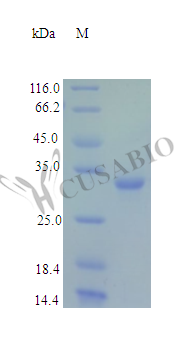
| Molecular Weight: | 31.7 kda |
| Physical state: | Lyophilized |
| Type: | Other Enzymes |
| Alias: | EC 3.1.3.46, TP53-induced glycolysis regulatory phosphatase |
| Host Cell: | E.coli |
| Shipping Condition: | Blue Ice |
| Unit(s): | 100 ug, 5 ug, 500 ug |
| Host name: | |
| Clone: | |
| Isotype: | |
| Immunogen: |
Description
Description: Fructose-bisphosphatase hydrolyzing fructose-2,6-bisphosphate as well as fructose-1,6-bisphosphate (PubMed:19015259). Acts as a negative regulator of glycolysis by lowering intracellular levels of fructose-2,6-bisphosphate in a p53/TP53-dependent manner, resulting in the pentose phosphate pathway (PPP) activation and NADPH production (PubMed:16839880, PubMed:22887998). Contributes to the generation of reduced glutathione to cause a decrease in intracellular reactive oxygen species (ROS) content, correlating with its ability to protect cells from oxidative or metabolic stress-induced cell death (PubMed:16839880, PubMed:19713938, PubMed:23726973, PubMed:22887998, PubMed:23817040). Plays a role in promoting protection against cell death during hypoxia by decreasing mitochondria ROS levels in a HK2-dependent manner through a mechanism that is independent of its fructose-bisphosphatase activity (PubMed:23185017). In response to cardiac damage stress, mediates p53-induced inhibition of myocyte mitophagy through ROS levels reduction and the subsequent inactivation of BNIP3. Reduced mitophagy results in an enhanced apoptotic myocyte cell death, and exacerbates cardiac damage (By similarity). Plays a role in adult intestinal regeneration; contributes to the growth, proliferation and survival of intestinal crypts following tissue ablation (PubMed:23726973). Plays a neuroprotective role against ischemic brain damage by enhancing PPP flux and preserving mitochondria functions (By similarity). Protects glioma cells from hypoxia- and ROS-induced cell death by inhibiting glycolysis and activating mitochondrial energy metabolism and oxygen consumption in a TKTL1-dependent and p53/TP53-independent manner (PubMed:22887998). Plays a role in cancer cell survival by promoting DNA repair through activating PPP flux in a CDK5-ATM-dependent signaling pathway during hypoxia and/or genome stress-induced DNA damage responses (PubMed:25928429). Involved in intestinal tumor progression (PubMed:23726973). {ECO:0000250|UniProtKB:Q8BZA9, ECO:0000269|PubMed:16839880, ECO:0000269|PubMed:19015259, ECO:0000269|PubMed:19713938, ECO:0000269|PubMed:22887998, ECO:0000269|PubMed:23185017, ECO:0000269|PubMed:23726973, ECO:0000269|PubMed:23817040, ECO:0000269|PubMed:25928429}.
Additional Text
Gene ID
57103
Gene Name
TIGAR
Uniprot ID
Q9NQ88
Protein Tag
TAT Tag
Storage Note
The shelf life is related to many factors, storage state, buffer ingredients, storage temperature and the stability of the protein itself. Generally, the shelf life of liquid form is 6 months at -20°C/-80°C. The shelf life of lyophilized form is 12 months at -20°C/-80°C.
 CSB-AP000111HU MSDS
SUPPORT
outstanding technical support

PRODUCT
we offer a full product guarantee

DELIVERY
we offer free delivery to UK universities and non profit organisations