Recombinant Pig Interleukin-6 receptor subunit alpha (IL6R), partial
Catalogue Number: CSB-YP011665PI1C7-CSB
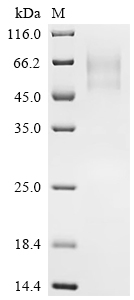
| Manufacturer: | Cusabio Biotech |
| Shelf Life: | 6 months |
| Molecular Weight: | 39.7 kda |
| Physical state: | Liquid or Lyophilized powder |
| Type: | Other Recombinant Protein |
| Alias: | IL-6 receptor subunit alpha;IL-6R subunit alpha;IL-6R-alpha;IL-6RA;IL-6R 1;CD antigen CD126;sIL6R |
| Host Cell: | Yeast |
| Shipping Condition: | Blue Ice |
| Unit(s): | 1 mg, 100 ug, 20 ug |
| Host name: | |
| Clone: | |
| Isotype: | |
| Immunogen: |
Description
Description: Part of the receptor for interleukin 6. Binds to IL6 with low affinity, but does not transduce a signal. Signal activation necessitate an association with IL6ST. Activation leads to the regulation of the immune response, acute-phase reactions and hematopoiesis. The interaction with membrane-bound IL6R and IL6ST stimulates 'classic signaling', the restricted expression of the IL6R limits classic IL6 signaling to only a few tissues such as the liver and some cells of the immune system. Whereas the binding of IL6 and soluble IL6R to IL6ST stimulates 'trans-signaling'. Alternatively, 'cluster signaling' occurs when membrane-bound IL6:IL6R complexes on transmitter cells activate IL6ST receptors on neighboring receiver cells. ; [Interleukin-6 receptor subunit alpha]: Signaling via the membrane-bound IL6R is mostly regenerative and anti-inflammatory. Drives naive CD4(+) T cells to the Th17 lineage, through 'cluster signaling' by dendritic cells. ; [Soluble interleukin-6 receptor subunit alpha]: Soluble form of IL6 receptor (sIL6R) that acts as an agonist of IL6 activity. The IL6:sIL6R complex (hyper-IL6) binds to IL6ST/gp130 on cell surfaces and induces signaling also on cells that do not express membrane-bound IL6R in a process called IL6 'trans-signaling'. sIL6R is causative for the pro-inflammatory properties of IL6 and an important player in the development of chronic inflammatory diseases. In complex with IL6, is required for induction of VEGF production. Plays a protective role during liver injury, being required for maintenance of tissue regeneration. 'Trans-signaling' in central nervous system regulates energy and glucose homeostasis.
Additional Text
Gene Name
IL6R
Protein Tag
6xHIS Tag
Storage Note
The shelf life is related to many factors, storage state, buffer ingredients, storage temperature and the stability of the protein itself. Generally, the shelf life of liquid form is 6 months at -20°C/-80°C. The shelf life of lyophilized form is 12 months at -20°C/-80°C.
Gene ID
399522
Uniprot ID
O18796
 CSB-YP011665PI1C7 MSDS
SUPPORT
outstanding technical support

PRODUCT
we offer a full product guarantee

DELIVERY
we offer free delivery to UK universities and non profit organisations