Human Prolactin protein, His tag (active)
Catalogue Number: GTX00069-PRO-GTX
GTX00069-PRO Image
GTX00069-PRO Image
GTX00069-PRO Image
GTX00069-PRO Image
GTX00069-PRO Image
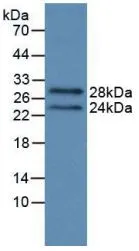
WB analysis of GTX00069-pro Human Prolactin protein (active).
GTX00069-PRO Image
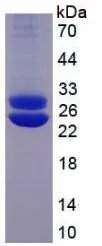
SDS-PAGE analysis of GTX00069-pro Human Prolactin protein (active).
GTX00069-PRO Image
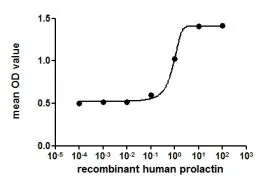
The dose effect curve of GTX00069-pro Human Prolactin protein (active) on MCF-7 cells. After incubation of Human Prolactin protein (active) for 72 hrs, cell proliferation was measured by Cell Counting Kit-8 (CCK-8).
GTX00069-PRO Image
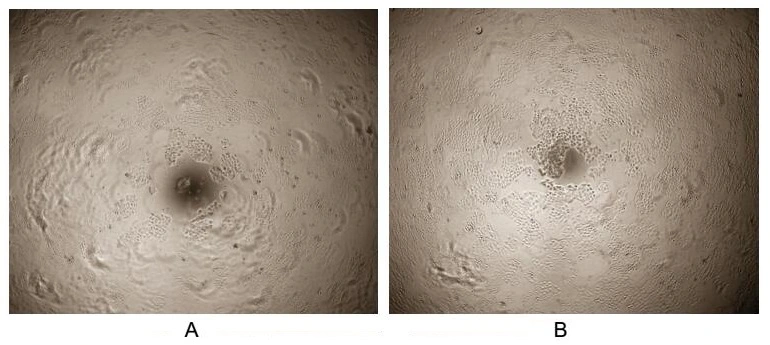
Cell proliferation effect of GTX00069-pro Human Prolactin protein (active). Cell viability was measured by Cell Counting Kit-8 (CCK-8). (A) Unstimulated MCF-7 cells cultured in DMEM for 72hrs. (B) MCF-7 cells cultured in DMEM, stimulated with 1 ng/ml PRL for 72hrs.
| Manufacturer: | GeneTex |
| Preservative: | ProClin™ 300 |
| Physical state: | Lyophilized |
| Type: | Bioactive Proteins |
| Alias: | prolactin , GHA1 |
| Host Cell: | HEK293 cells |
| Shipping Condition: | Blue Ice |
| Unit(s): | 10 ug |
| Application: | FA |
Description
Description: This gene encodes the anterior pituitary hormone prolactin. This secreted hormone is a growth regulator for many tissues, including cells of the immune system. It may also play a role in cell survival by suppressing apoptosis, and it is essential for lactation. Alternative splicing results in multiple transcript variants that encode the same protein. [provided by RefSeq, Aug 2011]
Additional Text
Gene Name
PRL
Gene ID
5617
Accession Number
NP_000939.1
Protein Tag
HIS Tag
UniProt ID
Q5THQ0
Note
For laboratory use only. Not for any clinical, therapeutic, or diagnostic use in humans or animals. Not for animal or human consumption.
Application Notes
PRL (prolactin), also known as luteotropin, is a hormone secreted from the pituitary gland and is best known for its role in enabling mammals to produce milk. PRL plays an essential role in metabolism, regulation of the immune system. According to reports, PRL also stimulates proliferation of certain cells, including MCF-7. Thus, proliferation assay of PRL was conducted using MCF-7 cells. Briefly, MCF-7 cells were seeded into triplicate wells of 96-well plates at a density of 2000 cells/well and allowed to attach overnight, then the medium was replaced with serum-free standard DMEM prior to the addition of various concentrations of PRL. After incubated for 72h, cells were observed by inverted microscope and cell proliferation was measured by Cell Counting Kit-8 (CCK-8). Briefly, 10 µl of CCK-8 solution was added to each well of the plate, then the absorbance at 450nm was measured using a microplate reader after incubating the plate for 1-4 hours at 37C. Cell proliferation of MCF-7 cells after stimulated with PRL. And PRL significantly promoted cell proliferation of MCF-7 cells. The ED₅₀ for this effect is typically 3. 709-8. 973 ng/ml
Storage Note
For short-term storage (1-2 weeks), store at 4C. For long-term storage, store at -20C or below. After reconstitution, keep as concentrated solution. Avoid freeze-thaw cycles.
 GTX00069-PRO Datasheet
SUPPORT
outstanding technical support

PRODUCT
we offer a full product guarantee

DELIVERY
we offer free delivery to UK universities and non profit organisations