Human Osteopontin protein, His tag (active)
Catalogue Number: GTX00123-PRO-GTX
GTX00123-PRO Image
GTX00123-PRO Image
GTX00123-PRO Image
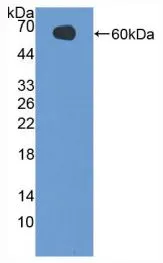
GTX00123-PRO Image
WB analysis of GTX00123-pro Human Osteopontin protein (active).
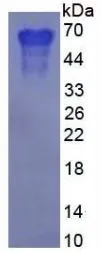
GTX00123-PRO Image
SDS-PAGE analysis of GTX00123-pro Human Osteopontin protein (active).
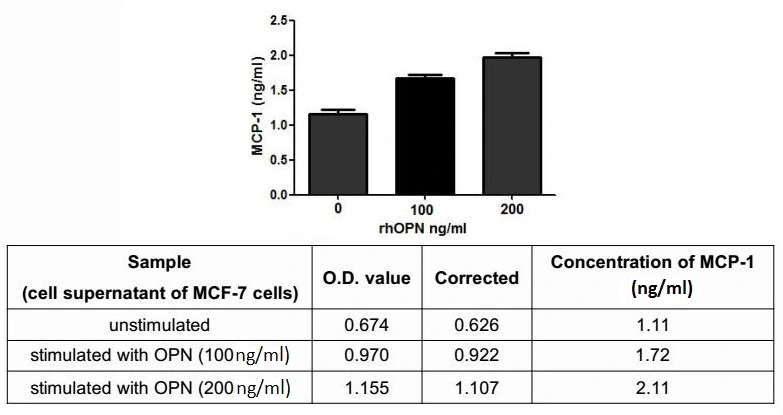
GTX00123-PRO Image
ELISA detection of secreted MCP-1 protein activation from MCF-7 cells induced by GTX00123-pro Human Osteopontin protein (active) for 24hrs. Recombinant protein concentrations: 100, and 200 ng/ml.
| Manufacturer: | GeneTex |
| Preservative: | ProClin™ 300 |
| Physical state: | Lyophilized |
| Type: | Cytokines |
| Alias: | secreted phosphoprotein 1 , BNSP , BSPI , ETA-1 , OPN |
| Host Cell: | HEK293 cells |
| Shipping Condition: | Blue Ice |
| Unit(s): | 10 ug |
| Application: | FA |
Description
Description: The protein encoded by this gene is involved in the attachment of osteoclasts to the mineralized bone matrix. The encoded protein is secreted and binds hydroxyapatite with high affinity. The osteoclast vitronectin receptor is found in the cell membrane and may be involved in the binding to this protein. This protein is also a cytokine that upregulates expression of interferon-gamma and interleukin-12. Several transcript variants encoding different isoforms have been found for this gene. [provided by RefSeq, Oct 2011]
Additional Text
Uniprot ID
P10451
Gene Name
SPP1
Gene ID
6696
Accession Number
NP_000573.1
Protein Tag
HIS Tag
Note
For laboratory use only. Not for any clinical, therapeutic, or diagnostic use in humans or animals. Not for animal or human consumption.
Application Notes
Osteopontin (OPN), a multifunctional phosphorylated glycoprotein, plays an important role in neutrophil recruitment and was found to induce the expression of proinflammatory chemokines including MCP-1 and MIP-1β which would promote migration and recruitment of inflammatory cells. It has been reported that OPN induces MCP-1 expression through the NF-kappa B pathways in MCF-7 breast cancer cell line. Briefly, MCF-7 cells were seeded overnight at a density of 1x10⁵ cells/ml, and treated with or without OPN(100 ng/ml and 200 ng/ml) for 24h and MCP-1 levels in the cell supernatant were determined by ELISA. MCP-1 levels in the cell supernatant of MCF-7 cells increased significantly after stimulated with OPN.
Storage Note
For short-term storage (1-2 weeks), store at 4C. For long-term storage, store at -20C or below. After reconstitution, keep as concentrated solution. Avoid freeze-thaw cycles.
 GTX00123-PRO Datasheet
SUPPORT
outstanding technical support

PRODUCT
we offer a full product guarantee

DELIVERY
we offer free delivery to UK universities and non profit organisations