Human ARSB protein, His tag
Catalogue Number: GTX00161-PRO-GTX
GTX00161-PRO Image
GTX00161-PRO Image
GTX00161-PRO Image
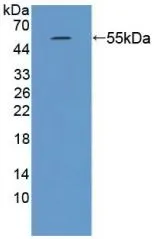
GTX00161-PRO Image
WB analysis of GTX00161-pro Human ARSB protein.
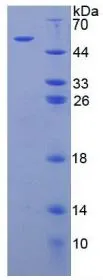
GTX00161-PRO Image
SDS-PAGE analysis of GTX00161-pro Human ARSB protein.
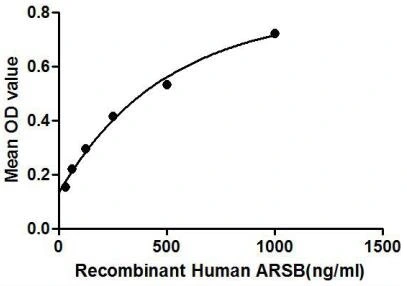
GTX00161-PRO Image
Functional ELISA analysis of GTX00161-pro Human ARSB protein which can bind immobilized uPAR protein.
| Manufacturer: | GeneTex |
| Preservative: | ProClin™ 300 |
| Physical state: | Lyophilized |
| Type: | Other Enzymes |
| Alias: | arylsulfatase B , ASB , G4S , MPS6 |
| Host Cell: | HEK293 cells |
| Shipping Condition: | Blue Ice |
| Unit(s): | 10 ug |
| Application: | FA |
Description
Description: Arylsulfatase B encoded by this gene belongs to the sulfatase family. The arylsulfatase B homodimer hydrolyzes sulfate groups of N-Acetyl-D-galactosamine, chondriotin sulfate, and dermatan sulfate. The protein is targeted to the lysozyme. Mucopolysaccharidosis type VI is an autosomal recessive lysosomal storage disorder resulting from a deficiency of arylsulfatase B. Two alternatively spliced transcript variants encoding distinct isoforms have been found for this gene. [provided by RefSeq, Dec 2016]
Additional Text
Gene Name
ARSB
Uniprot ID
P15848
Gene ID
411
Protein Tag
HIS Tag
Accession Number
NP_000037.2
Note
For laboratory use only. Not for any clinical, therapeutic, or diagnostic use in humans or animals. Not for animal or human consumption.
Application Notes
Arylsulfatase B (ARSB) is a lysosomal enzyme of the sulfatase family. ARSB hydrolyzes sulfate groups of N-Acetyl-D-galactosamine, chondriotin sulfate, and dermatan sulfate. The protein is targetted to the lysozyme. Besides, Plasminogen Activator, Urokinase Receptor (uPAR) has been identified as an interactor of ARSB, thus a binding ELISA assay was conducted to detect the interaction of recombinant human ARSB and recombinant human uPAR. Briefly, ARSB were diluted serially in PBS, with 0.01% BSA (pH 7.4). Duplicate samples of 100 µl were then transferred to uPAR-coated microtiter wells and incubated for 2h at 37C. Wells were washed with PBST and incubated for 1h with anti-ARSB pAb, then aspirated and washed 3 times. After incubation with HRP labelled secondary antibody, wells were aspirated and washed 3 times. With the addition of substrate solution, wells were incubated 15-25 minutes at 37C. Finally, add 50 µl stop solution to the wells and read at 450nm immediately. The binding activity of of ARSB and uPAR was in a dose dependent manner.
Storage Note
For short-term storage (1-2 weeks), store at 4C. For long-term storage, store at -20C or below. After reconstitution, keep as concentrated solution. Avoid freeze-thaw cycles.
 GTX00161-PRO Datasheet
SUPPORT
outstanding technical support

PRODUCT
we offer a full product guarantee

DELIVERY
we offer free delivery to UK universities and non profit organisations