Mouse TNF alpha protein, His tag (active)
Catalogue Number: GTX00288-PRO-GTX
GTX00288-PRO Image
GTX00288-PRO Image
GTX00288-PRO Image
GTX00288-PRO Image
GTX00288-PRO Image
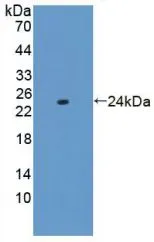
WB analysis of GTX00288-pro Mouse TNF alpha protein (active).
GTX00288-PRO Image
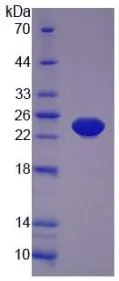
SDS-PAGE analysis of GTX00288-pro Mouse TNF alpha protein (active).
GTX00288-PRO Image
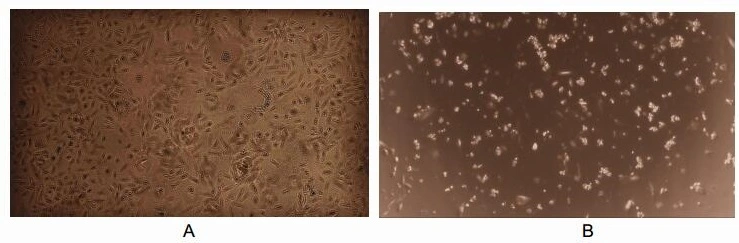
Cell necrosis effect of GTX00288-pro Mouse TNF alpha protein (active). (A) Unstimulated A549 cells cultured in DMEM for 72hrs. (B) A549 cells cultured in DMEM, stimulated with 10 ng/ml TNF alpha for 72hrs.
GTX00288-PRO Image
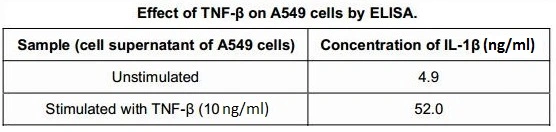
ELISA detection of secreted IL-1 beta expression from A549 cells stimulated by GTX00288-pro Mouse TNF alpha protein (active) at 10 ng/ml for 8hrs.
| Manufacturer: | GeneTex |
| Preservative: | ProClin™ 300 |
| Physical state: | Lyophilized |
| Type: | Cytokines |
| Alias: | tumor necrosis factor , DIF , TNF-a , TNF-alpha , TNFSF2 , TNFalpha , Tnfa , Tnfsf1a , Tnlg1f |
| Host Cell: | HEK293 cells |
| Shipping Condition: | Blue Ice |
| Unit(s): | 10 ug |
| Application: | FA |
Description
Description: This gene encodes a multifunctional proinflammatory cytokine that belongs to the tumor necrosis factor (TNF) superfamily. Members of this family are classified based on primary sequence, function, and structure. This protein is synthesized as a type-II transmembrane protein and is reported to be cleaved into products that exert distinct biological functions. It plays an important role in the innate immune response as well as regulating homeostasis but is also implicated in diseases of chronic inflammation. In mouse deficiency of this gene is associated with defects in response to bacterial infection, with defects in forming organized follicular dendritic cell networks and germinal centers, and with a lack of primary B cell follicles. Alternative splicing results in multiple transcript variants. [provided by RefSeq, Jun 2013]
Additional Text
Uniprot ID
P06804
Gene Name
TNF
Gene ID
21926
Protein Tag
HIS Tag
Note
For laboratory use only. Not for any clinical, therapeutic, or diagnostic use in humans or animals. Not for animal or human consumption.
Accession Number
NP_001265530.1
Application Notes
TNF-a (Tumor necrosis factor), being an endogenous pyrogen, is able to induce fever, necrosis, inflammation and to inhibit tumorigenesis. As reported, TNF-a could inhibit the proliferation and induce necrosis of A549 cells, and the concentration of IL-1β in cell supernatant will increase after stimulation. Therefore, A549 cells were incubated in DMEM with TNFa (1 ng/ml, 10 ng/ml) for 2h, 4h, 8h, 24h, 48h, then cells were observed by inverted microscope. Cell necrosis after incubation with TNF-a (10 ng/ml) for 72h.
Storage Note
For short-term storage (1-2 weeks), store at 4C. For long-term storage, store at -20C or below. After reconstitution, keep as concentrated solution. Avoid freeze-thaw cycles.
 GTX00288-PRO Datasheet
SUPPORT
outstanding technical support

PRODUCT
we offer a full product guarantee

DELIVERY
we offer free delivery to UK universities and non profit organisations