Rat PAM protein, His tag (active)
Catalogue Number: GTX00374-PRO-GTX
GTX00374-PRO Image
GTX00374-PRO Image
GTX00374-PRO Image
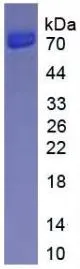
SDS-PAGE analysis of GTX00374-pro Rat PAM protein (active).
GTX00374-PRO Image
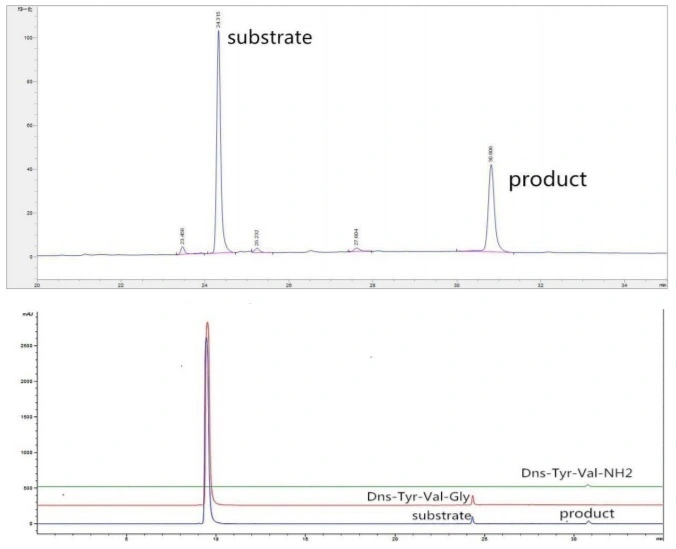
Hydrolysis assay of Dns-Tyr-Val-Gly by GTX00374-pro Rat PAM protein (active) for 30 min. The substrate (Dns-Tyr-Val-Gly) have been hydrolyzed to product (Dns-Tyr-Val-NH2) when the Rat PAM protein (active) was 5 µg/ml. The retention time of Substrate and Product are 24.315 and 30.806, respectively. Upper: Activity assay of Rat PAM protein (active) by HPLC. Lower: The reaction products compared with standard Dns-Tyr-Val-Gly and Dns-Tyr-Val-NH2.
| Manufacturer: | GeneTex |
| Preservative: | ProClin™ 300 |
| Physical state: | Lyophilized |
| Type: | Bioactive Proteins |
| Alias: | peptidylglycine alpha-amidating monooxygenase , PHM |
| Host Cell: | HEK293 cells |
| Shipping Condition: | Blue Ice |
| Unit(s): | 10 ug |
| Application: | FA |
Description
Description: catalyzes conversion of glycine-extended peptides into biologically active alpha-amidated peptides [RGD, Feb 2006]
Additional Text
Gene Name
PAM
Protein Tag
HIS Tag
Gene ID
25508
Uniprot ID
P14925
Note
For laboratory use only. Not for any clinical, therapeutic, or diagnostic use in humans or animals. Not for animal or human consumption.
Application Notes
Peptidyl-glycine alpha-amidating monooxygenase (PAM) is an enzyme that is required for the biosynthesis of many signaling peptides. It has two enzymatically active domains with catalytic activities-peptidylglycine alpha-hydroxylating monooxygenase (PHM) and peptidyl-alpha-hydroxyglycine alpha-amidating lyase (PAL). These catalytic domains work sequentially to catalyze neuroendocrine peptides to active alpha-amidated products. A typical activity assay using Dns-Tyr-Val-Gly as substrate, thus the recombinant rat PAM activity was measured by its ability to hydrolyze Dns-Tyr-Val-Gly to Dns-Tyr-Val-NH2. The reaction was preformed in 1mL containing 100 mM MES/KOH (pH 6.0), 30 mM KI, 30 mM KCl, 1µmol/L cupric sulfate, 100 µg/ml catalase, 1% (v/v) ethanol, 0.001% (v/v) Triton X-100, 10 mM ascorbate, 0.35 mM/L Dns-Tyr-Val-Gly (0.2 mg/ml) and initiated by addition various concentrations of PAM (0.1 µg/ml, 1 µg/ml, 5 µg/ml). Incubated at 37C for 30min, the reaction stopped by addition 6% (v/v) TFA. The product and substrate was detected by RP-HPLC with UV-detection at 280nm, the analyses were performed at 25C employing a Agilent ZORBAX Poroshell SB C18 column (9.4x250mm, 5µm), the flow rate was 1 ml/min. The mobile phase consisited of 100 mM sodium acetate (pH 6.5) and 35min linear gradient of 10-90% acetonitrile. The reaction product compared with standard Dns-Tyr-Val-Gly and Dns-Tyr-Val-NH2. After 30min later, the substrate have been hydrolyzed when the PAM was 5µg/ml. The retention time of Dns-Tyr-Val-Gly and Dns-Tyr-Val-NH2 is 24.315 and 30.806 respectively.
Accession Number
NP_037132.2
Storage Note
For short-term storage (1-2 weeks), store at 4C. For long-term storage, store at -20C or below. After reconstitution, keep as concentrated solution. Avoid freeze-thaw cycles.
 GTX00374-PRO Datasheet
SUPPORT
outstanding technical support

PRODUCT
we offer a full product guarantee

DELIVERY
we offer free delivery to UK universities and non profit organisations