AMPK gamma 2 antibody
Catalogue Number: GTX109105-GTX
GTX109105 Image
GTX109105 Image
GTX109105 Image
GTX109105 Image
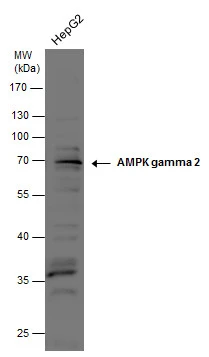
AMPK gamma 2 antibody detects AMPK gamma 2 protein by western blot analysis. Whole cell extracts (30 µg) was separated by 10% SDS-PAGE, and the membrane was blotted with AMPK gamma 2 antibody (GTX109105) at a dilution of 1:1000.
GTX109105 Image
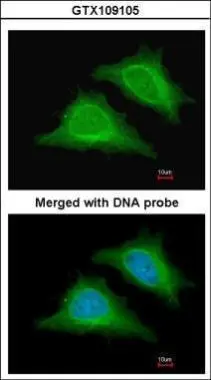
Immunofluorescence analysis of paraformaldehyde-fixed HeLa, using AMPK gamma-2(GTX109105) antibody at 1:200 dilution.
GTX109105 Image
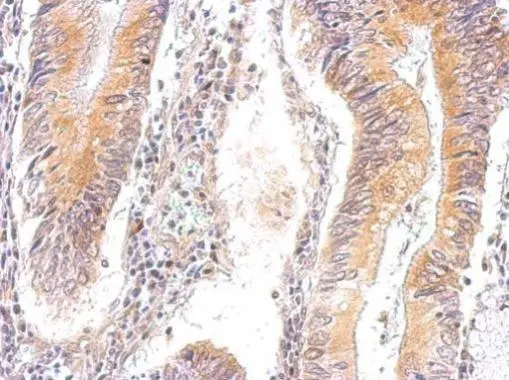
AMPK gamma 2 antibody detects PRKAG2 protein at cytosol on human gastric cancer by immunohistochemical analysis. Sample: Paraffin-embedded gastric cancer tissue. AMPK gamma 2 antibody (GTX109105) dilution: 1:500. Antigen Retrieval: Trilogy? (EDTA based, pH 8.0) buffer, 15min
| Manufacturer: | GeneTex |
| Preservative: | 0.01% Thimerosal|0.01% Thimerosal |
| Molecular Weight: | 63 |
| Physical state: | Liquid |
| Type: | Polyclonal Primary Antibody - Unconjugated |
| Alias: | protein kinase AMP-activated non-catalytic subunit gamma 2 , AAKG , AAKG2 , CMH6 , H91620p , WPWS |
| Shipping Condition: | Blue Ice |
| Unit(s): | 100 ul, 25 ul |
| Host name: | Rabbit |
| Clone: | |
| Isotype: | IgG |
| Immunogen: | Full length human AMPK gamma 2 Recombinant protein. |
| Application: | ICC, IF, IHC-P, WB |
Description
Description: AMP-activated protein kinase (AMPK) is a heterotrimeric protein composed of a catalytic alpha subunit, a noncatalytic beta subunit, and a noncatalytic regulatory gamma subunit. Various forms of each of these subunits exist, encoded by different genes. AMPK is an important energy-sensing enzyme that monitors cellular energy status and functions by inactivating key enzymes involved in regulating de novo biosynthesis of fatty acid and cholesterol. This gene is a member of the AMPK gamma subunit family and encodes a protein with four cystathionine beta-synthase domains. Mutations in this gene have been associated with ventricular pre-excitation (Wolff-Parkinson-White syndrome), progressive conduction system disease and cardiac hypertrophy. Alternate transcriptional splice variants, encoding different isoforms, have been characterized. [provided by RefSeq]
Additional Text
Gene ID
51422
Gene Name
PRKAG2
Uniprot ID
Q9UGJ0
Purification
Affinity Purified
Molecular Weight
63
Antibody Clonality
Polyclonal
Note
For In vitro laboratory use only. Not for any clinical, therapeutic, or diagnostic use in humans or animals. Not for animal or human consumption
Concentration
1 mg/ml
Application Notes
WB: 1:500-1:3000. ICC/IF: 1:100-1:1000. IHC-P: 1:100-1:1000. *Optimal dilutions/concentrations should be determined by the researcher.Not tested in other applications.
Storage Note
Store as concentrated solution. Centrifuge briefly prior to opening vial. For short-term storage (1-2 weeks), store at 4C. For long-term storage, aliquot and store at -20C or below. Avoid multiple freeze-thaw cycles.
 GTX109105 Datasheet
SUPPORT
outstanding technical support

PRODUCT
we offer a full product guarantee

DELIVERY
we offer free delivery to UK universities and non profit organisations