NFkB p105 antibody
Catalogue Number: GTX110585-GTX
GTX110585 Image
GTX110585 Image
GTX110585 Image
GTX110585 Image
GTX110585 Image
GTX110585 Image
GTX110585 Image
GTX110585 Image
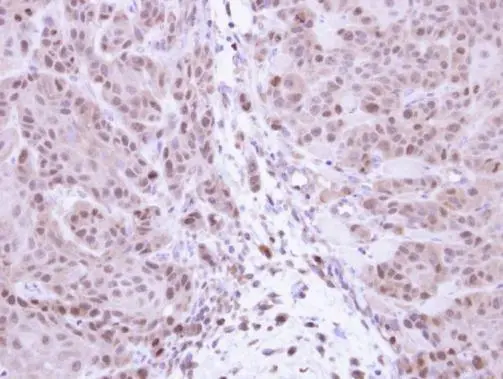
GTX110585 Image
GTX110585 Image
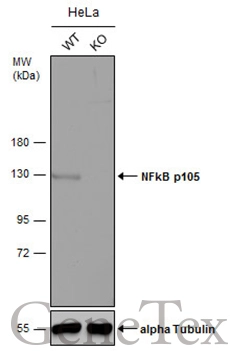
Wild-type (WT) and NFkB p105 knockout (KO) HeLa cell extracts (30 µg) were separated by 7.5% SDS-PAGE, and the membrane was blotted with NFkB p105 antibody (GTX110585) diluted at 1:1000. The HRP-conjugated anti-rabbit IgG antibody (GTX213110-01) was used to detect the primary antibody.
GTX110585 Image
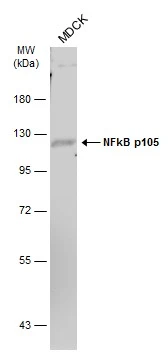
Whole cell extract (30 µg) was separated by 7.5% SDS-PAGE, and the membrane was blotted with NFkB p105 antibody (GTX110585) diluted at 1:1000. The HRP-conjugated anti-rabbit IgG antibody (GTX213110-01) was used to detect the primary antibody.
GTX110585 Image
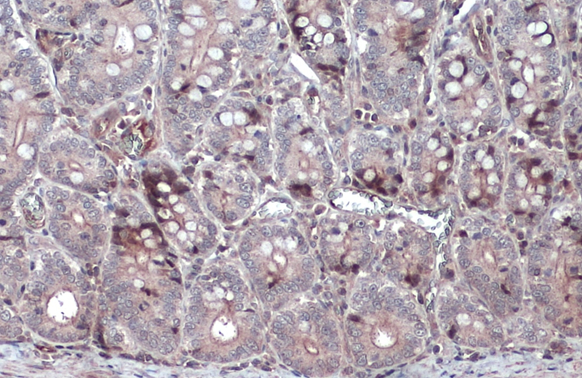
NFkB p105 antibody detects NFkB p105 protein at cytoplasm by immunohistochemical analysis. Sample: Paraffin-embedded dog intestine. NFkB p105 stained by NFkB p105 antibody (GTX110585) diluted at 1:500. Antigen Retrieval: Citrate buffer, pH 6.0, 15 min
GTX110585 Image
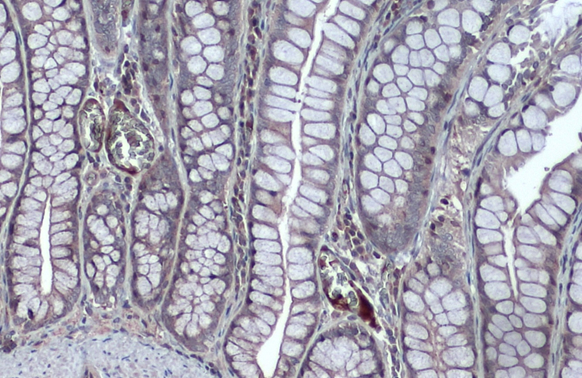
NFkB p105 antibody detects secreted NFkB p105 protein by immunohistochemical analysis. Sample: Paraffin-embedded dog colon. NFkB p105 stained by NFkB p105 antibody (GTX110585) diluted at 1:500. Antigen Retrieval: Citrate buffer, pH 6.0, 15 min
GTX110585 Image
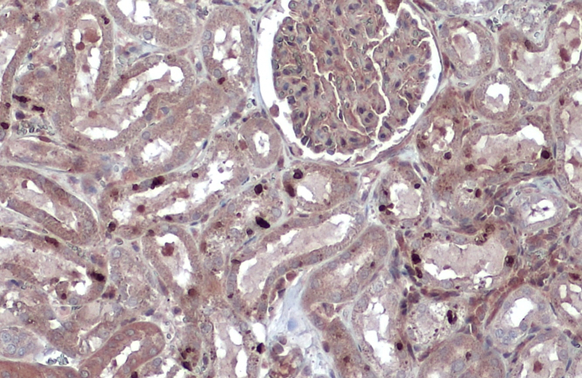
NFkB p105 antibody detects NFkB p105 protein at cytoplasm by immunohistochemical analysis. Sample: Paraffin-embedded dog kidney. NFkB p105 stained by NFkB p105 antibody (GTX110585) diluted at 1:500. Antigen Retrieval: Citrate buffer, pH 6.0, 15 min
GTX110585 Image
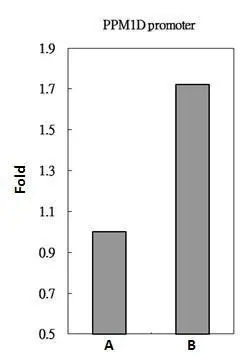
NFkB p105 antibody immunoprecipitates NFkB p105 protein-DNA in ChIP experiments. ChIP Sample: 293T whole cell lysate/extract A. 5 µg preimmune rabbit IgG B. 5 µg of NFkB p105 antibody (GTX110585) The precipitated DNA was detected by PCR with primer set targeting to PPM1D promoter.
GTX110585 Image
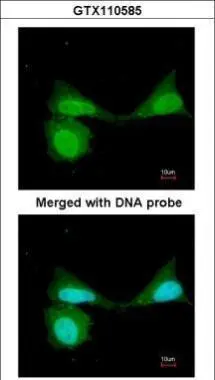
Immunofluorescence analysis of paraformaldehyde-fixed HeLa, using NFkB p105(GTX110585) antibody at 1:200 dilution.
GTX110585 Image
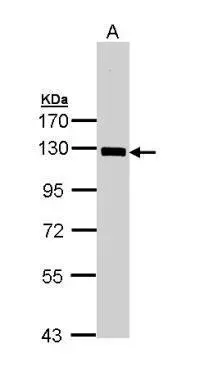
Sample (30 ug of whole cell lysate) A: A431 (GTX27909) 7.5% SDS PAGE GTX110585 diluted at 1:1000
GTX110585 Image
Immunohistochemical analysis of paraffin-embedded Cal27 xenograft, using NFkB p105 (GTX110585) antibody at 1:100 dilution. Antigen Retrieval: Trilogy? (EDTA based, pH 8.0) buffer, 15min
| Manufacturer: | GeneTex |
| Preservative: | 0.01% Thimerosal|0.01% Thimerosal |
| Molecular Weight: | 105 |
| Physical state: | Liquid |
| Type: | Polyclonal Primary Antibody - Unconjugated |
| Alias: | nuclear factor kappa B subunit 1 , CVID12 , EBP-1 , KBF1 , NF-kB1 , NF-kappa-B1 , NF-kappaB , NFKB-p105 , NFKB-p50 , NFkappaB , p105 , p50 |
| Shipping Condition: | Blue Ice |
| Unit(s): | 100 ul, 25 ul |
| Host name: | Rabbit |
| Clone: | |
| Isotype: | IgG |
| Immunogen: | Recombinant protein encompassing a sequence within the center region of human NFkB p105. The exact sequence is proprietary. |
| Application: | ICC, IF, IHC-P, ChIP, WB, IHC |
Description
Description: This gene encodes a 105 kD protein which can undergo cotranslational processing by the 26S proteasome to produce a 50 kD protein. The 105 kD protein is a Rel protein-specific transcription inhibitor and the 50 kD protein is a DNA binding subunit of the NF-kappa-B (NFKB) protein complex. NFKB is a transcription regulator that is activated by various intra- and extra-cellular stimuli such as cytokines, oxidant-free radicals, ultraviolet irradiation, and bacterial or viral products. Activated NFKB translocates into the nucleus and stimulates the expression of genes involved in a wide variety of biological functions. Inappropriate activation of NFKB has been associated with a number of inflammatory diseases while persistent inhibition of NFKB leads to inappropriate immune cell development or delayed cell growth. [provided by RefSeq]
Additional Text
Gene Name
NFKB1
Gene ID
4790
Uniprot ID
P19838
Purification
Affinity Purified
Antibody Clonality
Polyclonal
Note
For In vitro laboratory use only. Not for any clinical, therapeutic, or diagnostic use in humans or animals. Not for animal or human consumption
Molecular Weight
105
Concentration
1 mg/ml
Application Notes
WB: 1:500-1:3000. ICC/IF: 1:100-1:1000. IHC-P: 1:100-1:1000. *Optimal dilutions/concentrations should be determined by the researcher.Not tested in other applications.
Storage Note
Store as concentrated solution. Centrifuge briefly prior to opening vial. For short-term storage (1-2 weeks), store at 4C. For long-term storage, aliquot and store at -20C or below. Avoid multiple freeze-thaw cycles.
 GTX110585 Datasheet
SUPPORT
outstanding technical support

PRODUCT
we offer a full product guarantee

DELIVERY
we offer free delivery to UK universities and non profit organisations