Vinculin antibody [VIN-11-5]
Catalogue Number: GTX11193-GTX
GTX11193 Image
GTX11193 Image
GTX11193 Image
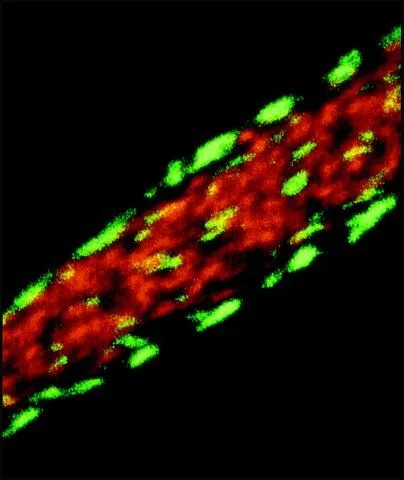
ICC/IF analysis of an isolated smooth muscle cell (chicken gizzard)using GTX11193 Vinculin antibody [VIN-11-5] (green) and anti-alpha-Actinin antibody (red).
GTX11193 Image
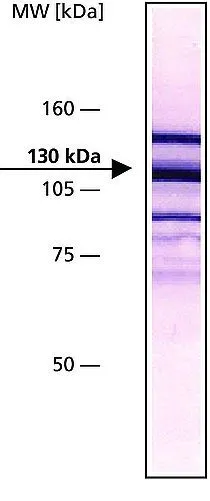
WB analysis of chicken gizzard extract using GTX11193 Vinculin antibody [VIN-11-5] at 1:200.
| Manufacturer: | GeneTex |
| Preservative: | 15 mM Sodium azide |
| Molecular Weight: | 125 |
| Physical state: | Liquid |
| Type: | Monoclonal Primary Antibody - Unconjugated |
| Alias: | Vinculin |
| Shipping Condition: | Blue Ice |
| Unit(s): | 200 ul |
| Host name: | Mouse |
| Clone: | VIN-11-5 |
| Isotype: | IgG1 |
| Immunogen: | smooth muscle vinculin from chicken gizzard. |
| Application: | ICC, IF, WB |
Description
Description: Cytoskeletal filaments are associated with the plasma membrane in areas of cell contact. In particular it has been shown that bundles of actin containing microfilaments are attached to the cytoplasmic faces of the membrane in cell-substrate focal contacts (adhesion plaques) of cultured fibroblasts. Besides actin, which is the major constituent of microfilaments, other actin related proteins are found close to or in the area of microfilament membrane association in contact regions. Vinculin is associated with the cytoplasmic aspect of contact areas close to the membrane. It has been suggested that vinculin is a possible link between ends of the bundles of actin filaments and the plasma membrane. It has also been proposed that vinculin may be involved in the transmembrane induction of actin bundle formation.Monoclonal Anti-Vinculin may be used for the immunocytochemical localization of vinculin using indirect immunofluorescent labeling of cultured fibroblasts or for specific identification of the vinculin band in immunoblotting techniques.
Additional Text
Gene Name
VCL
Molecular Weight
125
Gene ID
396422
Purification
Unpurified
Uniprot ID
P12003
Antibody Clonality
Monoclonal
Note
For In vitro laboratory use only. Not for any clinical, therapeutic, or diagnostic use in humans or animals. Not for animal or human consumption
Application Notes
ICC/IF: 1:50. *Optimal dilutions/concentrations should be determined by the researcher.Not tested in other applications.
Storage Note
Store as concentrated solution. Centrifuge briefly prior to opening vial. For short-term storage (1-2 weeks), store at 4C. For long-term storage, aliquot and store at -20C or below. Avoid multiple freeze-thaw cycles.
 GTX11193 Datasheet
SUPPORT
outstanding technical support

PRODUCT
we offer a full product guarantee

DELIVERY
we offer free delivery to UK universities and non profit organisations