PABPC4 antibody
Catalogue Number: GTX122079-GTX
GTX122079 Image
GTX122079 Image
GTX122079 Image
GTX122079 Image
GTX122079 Image
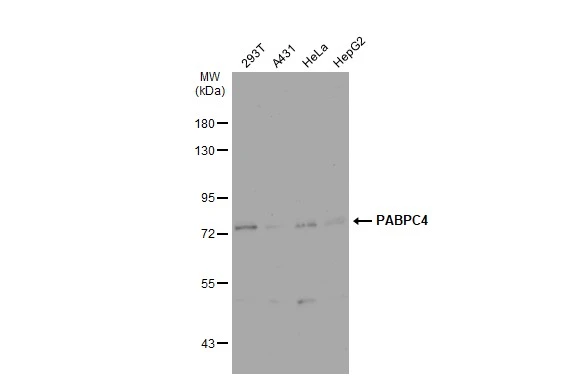
Various whole cell extracts (30 µg) were separated by 7.5% SDS-PAGE, and the membrane was blotted with PABPC4 antibody (GTX122079) diluted at 1:1000. The HRP-conjugated anti-rabbit IgG antibody (GTX213110-01) was used to detect the primary antibody.
GTX122079 Image
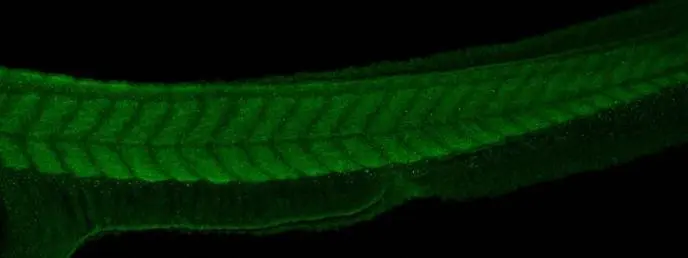
PABPC4 antibody detects Pabpc4 protein at myotomes on whole-mount zebrafish embryos by immunohistochemical analysis. Sample: Paraformaldehyde-fixed zebrafish embryos. PABPC4 antibody (GTX122079) dilution: 1:200.
GTX122079 Image
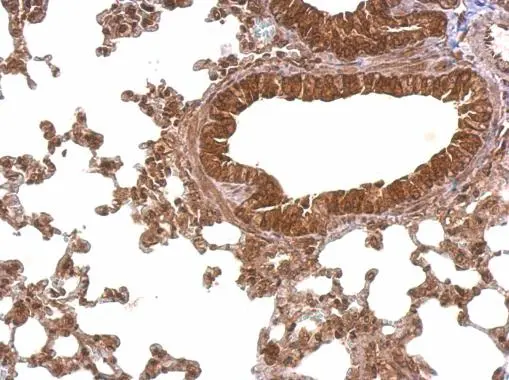
PABPC4 antibody detects PABPC4 protein at cytosol on mouse lung by immunohistochemical analysis. Sample: Paraffin-embedded mouse lung. PABPC4 antibody (GTX122079) dilution: 1:500. Antigen Retrieval: Trilogy? (EDTA based, pH 8.0) buffer, 15min
GTX122079 Image
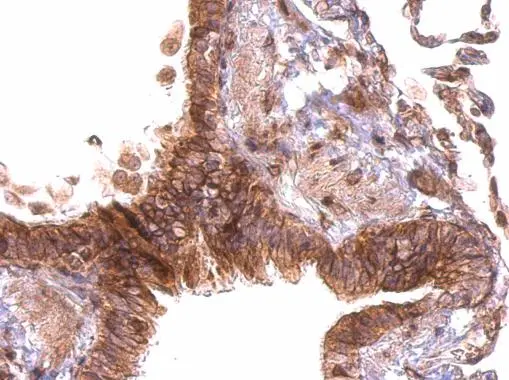
PABPC4 antibody detects PABPC4 protein at cytosol on human lung carcinoma by immunohistochemical analysis. Sample: Paraffin-embedded human lung carcinoma. PABPC4 antibody (GTX122079) dilution: 1:500. Antigen Retrieval: Trilogy? (EDTA based, pH 8.0) buffer, 15min
| Manufacturer: | GeneTex |
| Preservative: | 0.01% Thimerosal|0.01% Thimerosal |
| Molecular Weight: | 71 |
| Physical state: | Liquid |
| Type: | Polyclonal Primary Antibody - Unconjugated |
| Alias: | poly(A) binding protein cytoplasmic 4 , APP-1 , APP1 , PABP4 , iPABP |
| Shipping Condition: | Blue Ice |
| Unit(s): | 100 ul, 25 ul |
| Host name: | Rabbit |
| Clone: | |
| Isotype: | IgG |
| Immunogen: | Recombinant protein encompassing a sequence within the center region of human PABPC4. The exact sequence is proprietary. |
| Application: | IHC-P, WB, IHC-WM |
Description
Description: Poly(A)-binding proteins (PABPs) bind to the poly(A) tail present at the 3-prime ends of most eukaryotic mRNAs. PABPC4 or IPABP (inducible PABP) was isolated as an activation-induced T-cell mRNA encoding a protein. Activation of T cells increased PABPC4 mRNA levels in T cells approximately 5-fold. PABPC4 contains 4 RNA-binding domains and proline-rich C terminus. PABPC4 is localized primarily to the cytoplasm. It is suggested that PABPC4 might be necessary for regulation of stability of labile mRNA species in activated T cells. PABPC4 was also identified as an antigen, APP1 (activated-platelet protein-1), expressed on thrombin-activated rabbit platelets. PABPC4 may also be involved in the regulation of protein translation in platelets and megakaryocytes or may participate in the binding or stabilization of polyadenylates in platelet dense granules. Alternatively spliced transcript variants encoding different isoforms have been found for this gene. [provided by RefSeq]
Additional Text
Gene Name
PABPC4
Uniprot ID
Q13310
Concentration
0.6 mg/ml
Purification
Affinity Purified
Gene ID
8761
Molecular Weight
71
Antibody Clonality
Polyclonal
Note
For In vitro laboratory use only. Not for any clinical, therapeutic, or diagnostic use in humans or animals. Not for animal or human consumption
Application Notes
WB: 1:500-1:3000. IHC-P: 1:100-1:1000. *Optimal dilutions/concentrations should be determined by the researcher.Not tested in other applications.
Storage Note
Store as concentrated solution. Centrifuge briefly prior to opening vial. For short-term storage (1-2 weeks), store at 4C. For long-term storage, aliquot and store at -20C or below. Avoid multiple freeze-thaw cycles.
 GTX122079 Datasheet
SUPPORT
outstanding technical support

PRODUCT
we offer a full product guarantee

DELIVERY
we offer free delivery to UK universities and non profit organisations