PSD95 antibody
Catalogue Number: GTX133091-GTX
GTX133091 Image
GTX133091 Image
GTX133091 Image
GTX133091 Image
GTX133091 Image
GTX133091 Image
GTX133091 Image

GTX133091 Image
GTX133091 Image
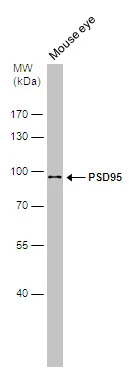
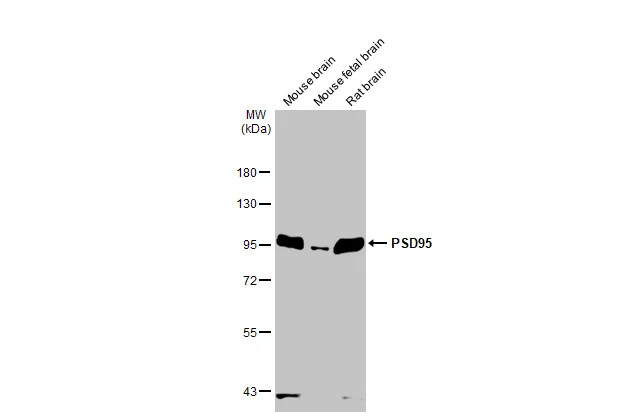
Mouse tissue extract (50 µg) was separated by 7.5% SDS-PAGE, and the membrane was blotted with PSD95 antibody (GTX133091) diluted at 1:1000.
GTX133091 Image
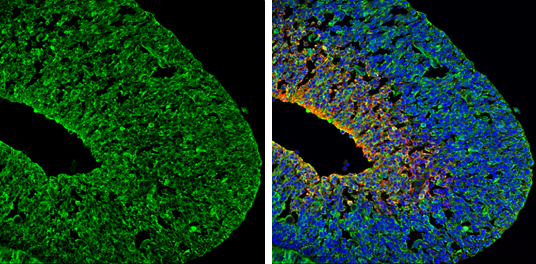
PSD95 antibody detects PSD95 protein expression by immunohistochemical analysis. Sample: Frozen sectioned E13.5 Rat brain. Green: PSD95 protein stained by PSD95 antibody (GTX133091) diluted at 1:250. Red: beta Tubulin 3/ TUJ1, a mature neuron marker, stained by beta Tubulin 3/ TUJ1 antibody [GT11710] (GTX631836) diluted at 1:500. Blue: Fluoroshield with DAPI (GTX30920).
GTX133091 Image
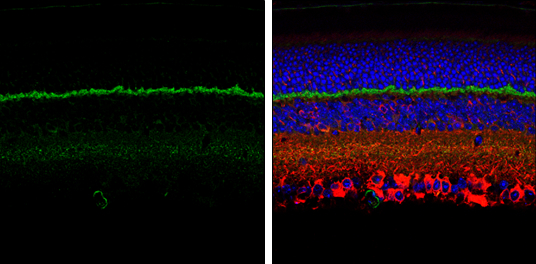
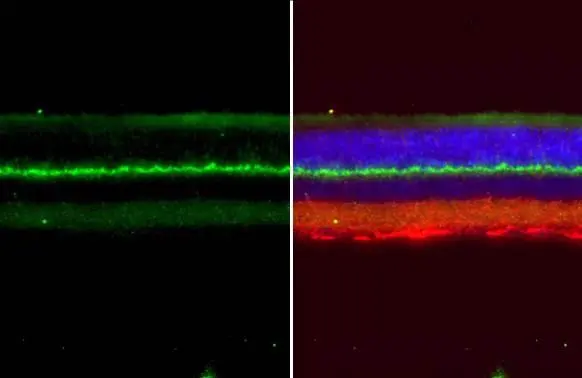
PSD95 antibody detects PSD95 protein expression by immunohistochemical analysis. Sample: Paraffin-Embedded adult mouse retina. Green: PSD95 protein stained by PSD95 antibody (GTX133091) diluted at 1:250. Red: beta Tubulin 3/ TUJ1, stained by beta Tubulin 3/ TUJ1 antibody [GT11710] (GTX631836) diluted at 1:250. Blue: Fluoroshield with DAPI (GTX30920). Antigen Retrieval: Citrate buffer, pH 6.0, 15 min
GTX133091 Image
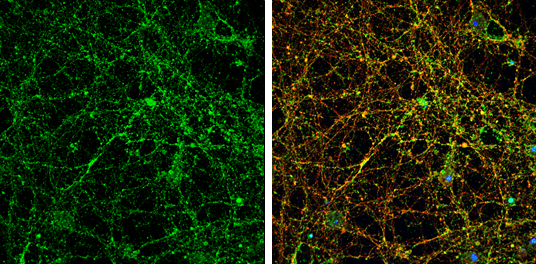
PSD95 antibody detects PSD95 protein by immunofluorescent analysis. Sample: DIV14 rat E18 primary cortical neurons were fixed in 4% paraformaldehyde at RT for 15 min. Green: PSD95 protein stained by PSD95 antibody (GTX133091) diluted at 1:500. Red: beta Tubulin 3/ Tuj1, stained by beta Tubulin 3/ Tuj1 antibody [GT1338] (GTX631831) diluted at 1:500. Blue: Fluoroshield with DAPI (GTX30920).
GTX133091 Image
PSD95 antibody detects PSD95 protein at nucleus by immunohistochemical analysis. Sample: Paraffin-embedded mouse eye. Green: PSD95 stained by PSD95 antibody (GTX133091) diluted at 1:500. Red: beta Tubulin 3/ Tuj1 , a Cytoskeleton marker, stained by beta Tubulin 3/ Tuj1 antibody [GT11710] (GTX631836) diluted at 1:500. Blue: Fluoroshield with DAPI (GTX30920). Antigen Retrieval: Citrate buffer, pH 6.0, 15 min
GTX133091 Image
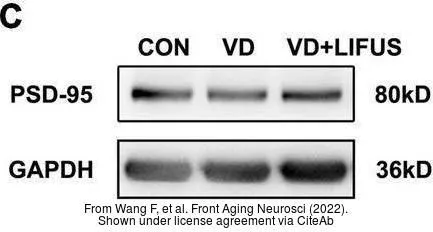
The data was published in the 2022 in Front Aging Neurosci. PMID: 35264943
GTX133091 Image
Various tissue extracts (50 µg) were separated by 7.5% SDS-PAGE, and the membrane was blotted with PSD95 antibody (GTX133091) diluted at 1:1000. The HRP-conjugated anti-rabbit IgG antibody (GTX213110-01) was used to detect the primary antibody.
GTX133091 Image
Human tissue extract (30 µg) was separated by 7.5% SDS-PAGE, and the membrane was blotted with PSD95 antibody (GTX133091) diluted at 1:1000. The HRP-conjugated anti-rabbit IgG antibody (GTX213110-01) was used to detect the primary antibody.
| Manufacturer: | GeneTex |
| Preservative: | 0.025% ProClin 300|0.025% ProClin 300 |
| Molecular Weight: | 80 |
| Physical state: | Liquid |
| Type: | Polyclonal Primary Antibody - Unconjugated |
| Alias: | discs large MAGUK scaffold protein 4 , Dlgh4 , PSD-95 , PSD95 , SAP90 , SAP90A |
| Shipping Condition: | Blue Ice |
| Unit(s): | 100 ul, 25 ul |
| Host name: | Rabbit |
| Clone: | |
| Isotype: | IgG |
| Immunogen: | Carrier-protein conjugated synthetic peptide encompassing a sequence within the N-terminus region of mouse PSD95. The exact sequence is proprietary. |
| Application: | ICC, IF, IHC-P, WB, IHC-Fr |
Description
Description: Interacts with the cytoplasmic tail of NMDA receptor subunits and shaker-type potassium channels. Required for synaptic plasticity associated with NMDA receptor signaling. Overexpression or depletion of DLG4 changes the ratio of excitatory to inhibitory synapses in hippocampal neurons. May reduce the amplitude of ACCN3 acid-evoked currents by retaining the channel intracellularly. May regulate the intracellular trafficking of ADR1B.
Additional Text
Gene Name
DLG4
Concentration
1.31 mg/mL
Purification
Affinity Purified
Molecular Weight
80
Gene ID
13385
Uniprot ID
Q62108
Antibody Clonality
Polyclonal
Note
For In vitro laboratory use only. Not for any clinical, therapeutic, or diagnostic use in humans or animals. Not for animal or human consumption
Application Notes
WB: 1:500-1:3000. ICC/IF: 1:100-1:1000. IHC-P: 1:100-1:1000. IHC-Fr: 1:100-1:1000. *Optimal dilutions/concentrations should be determined by the researcher.Not tested in other applications.
Short Description
PSD95 antibody recognizes postsynaptic density protein 95, an ~80 kDa multidomain scaffold protein enriched at neuron postsynaptic excitatory membranes. It belongs to the membrane-associated guanylate kinase (MAGUK) family, which also contains PSD-93, SAP97 and SAP102. PSD95 is one of the most abundant proteins in the PSD, and functions in synapse maturation, strength, and plasticity.
Storage Note
Store as concentrated solution. Centrifuge briefly prior to opening vial. For short-term storage (1-2 weeks), store at 4C. For long-term storage, aliquot and store at -20C or below. Avoid multiple freeze-thaw cycles.
 GTX133091 Datasheet
SUPPORT
outstanding technical support

PRODUCT
we offer a full product guarantee

DELIVERY
we offer free delivery to UK universities and non profit organisations