TrxR1 antibody, C-term
Catalogue Number: GTX13574-GTX
GTX13574 Image
GTX13574 Image
GTX13574 Image
GTX13574 Image
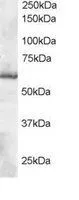
WB analysis of human placenta lysate using GTX13574 TrxR1 antibody, C-term. Dilution : 0.1µg/ml Loading : 35µg protein in RIPA buffer
GTX13574 Image
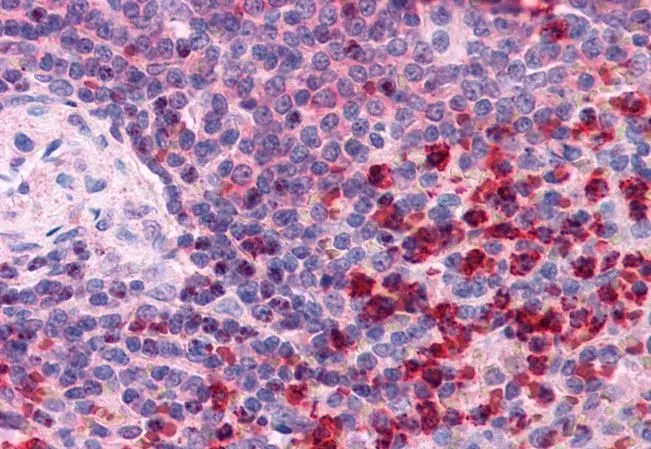
IHC-P analysis of human spleen using GTX13574 TrxR1 antibody, C-term. Antigen retrieval : citrate buffer pH 6 Dilution : 2.5µg/ml
GTX13574 Image
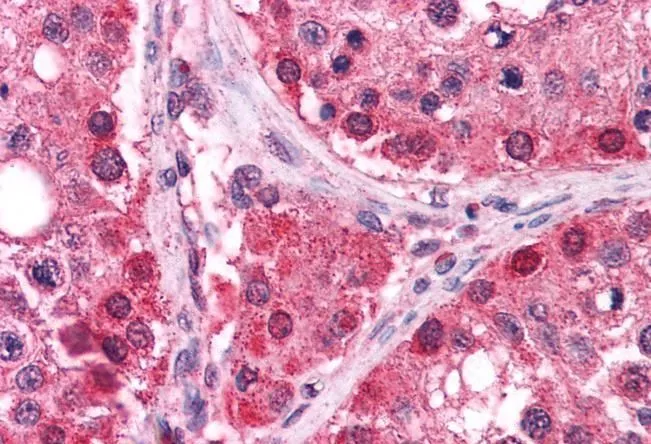
IHC-P analysis of human testis using GTX13574 TrxR1 antibody, C-term. Antigen retrieval : citrate buffer pH 6 Dilution : 2.5µg/ml
| Manufacturer: | GeneTex |
| Preservative: | 0.02% Sodium azide|0.02% Sodium azide |
| Molecular Weight: | 71 |
| Physical state: | Liquid |
| Type: | Polyclonal Primary Antibody - Unconjugated |
| Alias: | thioredoxin reductase 1 , GRIM-12 , TR , TR1 , TRXR1 , TXNR |
| Shipping Condition: | Blue Ice |
| Unit(s): | 100 ug |
| Host name: | Goat |
| Clone: | |
| Isotype: | IgG |
| Immunogen: | Peptide with sequence TKRSGASILQAGC, from the C Terminus of the protein sequence according to NP_003321.2; NP_877393.1; NP_877419.1; NP_877420.1; NP_001087240.1. |
| Application: | IHC-P, WB |
Description
Description: The protein encoded by this gene belongs to the pyridine nucleotide-disulfide oxidoreductase family, and is a member of the thioredoxin (Trx) system. Three thioredoxin reductase (TrxR) isozymes are found in mammals. TrxRs are selenocysteine-containing flavoenzymes, which reduce thioredoxins, as well as other substrates, and play a key role in redox homoeostasis. This gene encodes an ubiquitously expressed, cytosolic form of TrxR, which functions as a homodimer containing FAD, and selenocysteine (Sec) at the active site. Sec is encoded by UGA codon that normally signals translation termination. The 3' UTRs of selenoprotein mRNAs contain a conserved stem-loop structure, the Sec insertion sequence (SECIS) element, which is necessary for the recognition of UGA as a Sec codon rather than as a stop signal. Alternative splicing, primarily at the 5' end, results in transcript variants encoding same or different isoforms, including a glutaredoxin-containing isoform that is predominantly expressed in testis. [provided by RefSeq, May 2017]
Additional Text
Gene Name
TXNRD1
Uniprot ID
Q16881
Concentration
0.5 mg/ml
Gene ID
7296
Molecular Weight
71
Purification
Ammonium Sulfate Precipitated; Affinity Purified
Antibody Clonality
Polyclonal
Note
For In vitro laboratory use only. Not for any clinical, therapeutic, or diagnostic use in humans or animals. Not for animal or human consumption
Application Notes
WB: 0.1-1µg/ml. IHC-P: 2.5µg/ml. *Optimal dilutions/concentrations should be determined by the researcher.Not tested in other applications.
Storage Note
Store as concentrated solution. Centrifuge briefly prior to opening vial. For short-term storage (1-2 weeks), store at 4C. For long-term storage, aliquot and store at -20C or below. Avoid multiple freeze-thaw cycles.
 GTX13574 Datasheet
SUPPORT
outstanding technical support

PRODUCT
we offer a full product guarantee

DELIVERY
we offer free delivery to UK universities and non profit organisations