Caspase 3 antibody [31A1067]
Catalogue Number: GTX13585-GTX
GTX13585 Image
GTX13585 Image
GTX13585 Image
GTX13585 Image
GTX13585 Image
GTX13585 Image

GTX13585 Image
GTX13585 Image
GTX13585 Image
GTX13585 Image
GTX13585 Image
GTX13585 Image
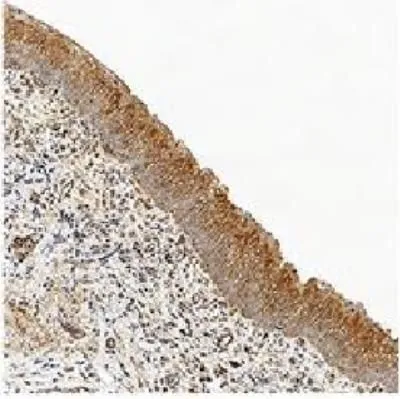
IHC-P analysis of human bladder tissue using GTX13585 Caspase 3 antibody [31A1067]. Dilution : 1:50
GTX13585 Image
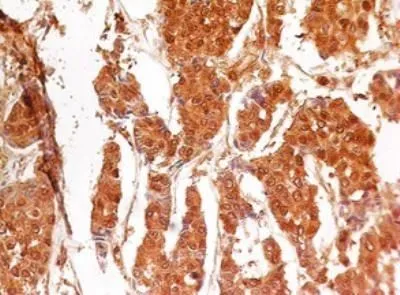
IHC-P analysis of human breast carcinoma tissue using GTX13585 Caspase 3 antibody [31A1067]. Dilution : 4 µg/ml
GTX13585 Image
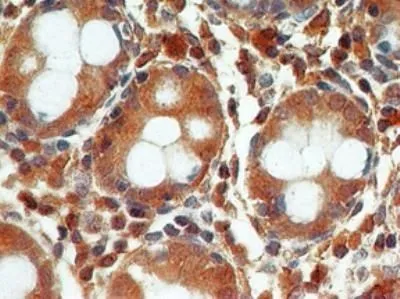
IHC-P analysis of human colon tissue using GTX13585 Caspase 3 antibody [31A1067]. Dilution : 4 µg/ml
GTX13585 Image
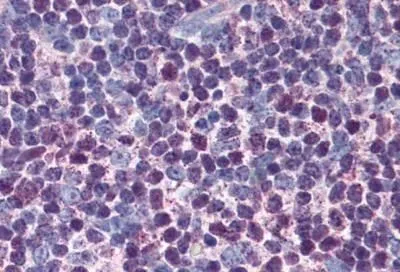
IHC-P analysis of human thymus tissue using GTX13585 Caspase 3 antibody [31A1067]. Dilution : 5 µg/ml Antigen retrieval : Heat-induced antigen retrieval
GTX13585 Image
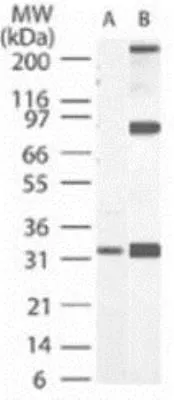
WB analysis of (A) RAW264.7 and (B) NIH-3T3 cell lysate using GTX13585 Caspase 3 antibody [31A1067]. Dilution : 32 µg/ml
GTX13585 Image
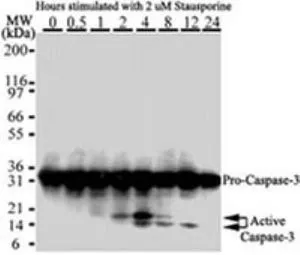
WB analysis of 2mM staurosporine treated HeLa cell lysate using GTX13585 Caspase 3 antibody [31A1067].
GTX13585 Image
WB analysis of HeLa cell lysate using GTX13585 Caspase 3 antibody [31A1067].
GTX13585 Image
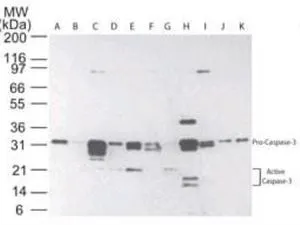
WB analysis of human (A) brain, (B) heart, (C) intestine, (D) kidney, (E) liver, (F) lung, (G) muscle, (H) stomach, (I) spleen, (J) ovary, and (K) testis tissue lysate using GTX13585 Caspase 3 antibody [31A1067].
GTX13585 Image
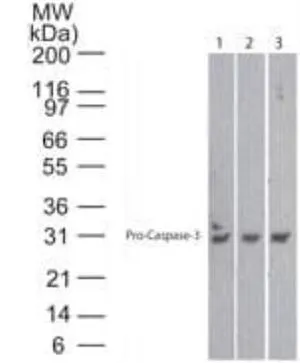
WB analysis of human(Lane 1), mouse(Lane 2), and rat heart lysate(Lane 3) using GTX13585 Caspase 3 antibody [31A1067].
GTX13585 Image
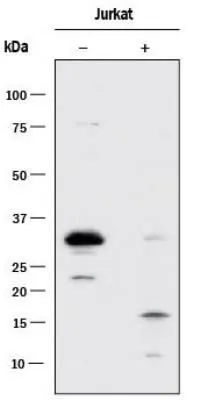
WB analysis of Jurkat cell lysate untreated (-) or treated (+) with Etoposide using GTX13585 Caspase 3 antibody [31A1067]. Dilution : 1 µg/ml
GTX13585 Image
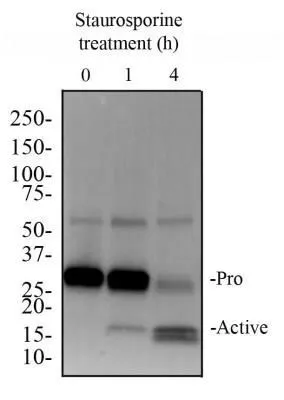
WB analysis of Jurkat cell lysate treated with and without 2 uM staurosporine using GTX13585 Caspase 3 antibody [31A1067]. Dilution : 5 µg/ml
| Manufacturer: | GeneTex |
| Preservative: | 0.05% Sodium azide|0.05% Sodium azide |
| Molecular Weight: | 32 |
| Physical state: | Liquid |
| Type: | Monoclonal Primary Antibody - Unconjugated |
| Alias: | caspase 3 , CPP32 , CPP32B , SCA-1 |
| Shipping Condition: | Blue Ice |
| Unit(s): | 100 ug |
| Host name: | Mouse |
| Clone: | 31A1067 |
| Isotype: | IgG1 |
| Immunogen: | Full-length recombinant human caspase-3 protein was used as immunogen. The antibody recognizes an epitope in the large domain subunit of Caspase-3. As such it will recognize pro Caspase-3 and the large subunit cleavage fragment. |
| Application: | FC, ICC, IF, IHC-P, EM, WB, IHC-Fr, MS |
Description
Description: This gene encodes a protein which is a member of the cysteine-aspartic acid protease (caspase) family. Sequential activation of caspases plays a central role in the execution-phase of cell apoptosis. Caspases exist as inactive proenzymes which undergo proteolytic processing at conserved aspartic residues to produce two subunits, large and small, that dimerize to form the active enzyme. This protein cleaves and activates caspases 6, 7 and 9, and the protein itself is processed by caspases 8, 9 and 10. It is the predominant caspase involved in the cleavage of amyloid-beta 4A precursor protein, which is associated with neuronal death in Alzheimer's disease. Alternative splicing of this gene results in two transcript variants that encode the same protein. [provided by RefSeq]
Additional Text
Gene Name
CASP3
Gene ID
836
Molecular Weight
32
Uniprot ID
P42574
Purification
Protein G purified
Antibody Clonality
Monoclonal
Note
For In vitro laboratory use only. Not for any clinical, therapeutic, or diagnostic use in humans or animals. Not for animal or human consumption
Concentration
1 mg/ml
Application Notes
WB: 1 - 5 µg/ml. IHC-P: 1:10 - 1:500. IHC-Fr: 1:10 - 1:500. *Optimal dilutions/concentrations should be determined by the researcher.Not tested in other applications.
Storage Note
Store as concentrated solution. Centrifuge briefly prior to opening vial. For short-term storage (1-2 weeks), store at 4C. For long-term storage, aliquot and store at -20C or below. Avoid multiple freeze-thaw cycles.
 GTX13585 Datasheet
SUPPORT
outstanding technical support

PRODUCT
we offer a full product guarantee

DELIVERY
we offer free delivery to UK universities and non profit organisations