Carbonic Anhydrase IX antibody
Catalogue Number: GTX15086-GTX
GTX15086 Image
GTX15086 Image

GTX15086 Image
GTX15086 Image
GTX15086 Image
GTX15086 Image
GTX15086 Image
GTX15086 Image
GTX15086 Image
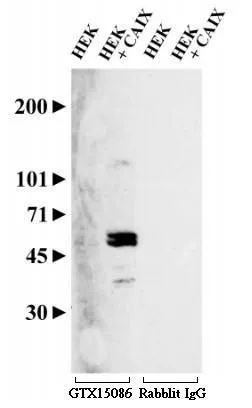
WB analysis of HEK overexpressing Carbonic Anhydrase IX cell lysate using GTX15086 Carbonic Anhydrase IX antibody. Rabbit IgG was used as a negative control.
GTX15086 Image
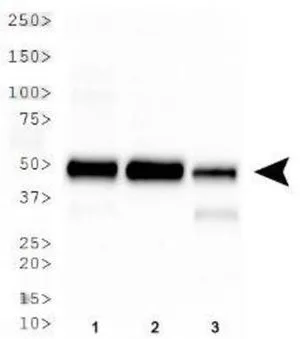
WB analysis of (1)HeLa, (2)MDA-MB-231 and (3)A549 cell lysate using GTX15086 Carbonic Anhydrase IX antibody.
GTX15086 Image
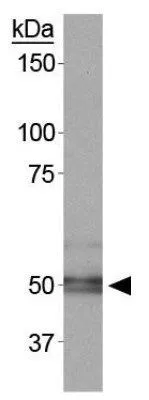
WB analysis of HeLa cell lysate using GTX15086 Carbonic Anhydrase IX antibody.
GTX15086 Image
WB analysis of rat renal cortex tissue lysate using GTX15086 Carbonic Anhydrase IX antibody.
GTX15086 Image
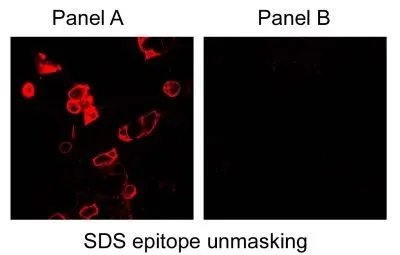
ICC/IF analysis of HEK 293 cells overexpressing Carbonic Anhydrase IX (Panel A) and mock cells (Panel B) using GTX15086 Carbonic Anhydrase IX antibody.
GTX15086 Image
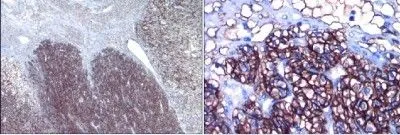
IHC-P analysis of renal carcinoma tissue using GTX15086 Carbonic Anhydrase IX antibody.
GTX15086 Image
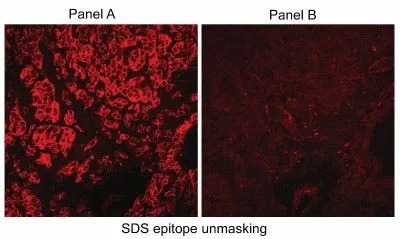
IHC-Fr analysis of renal carcinoma tissue using GTX15086 Carbonic Anhydrase IX antibody. Panel A : primary antibody Panel B : staining with normal rabbit serum
GTX15086 Image
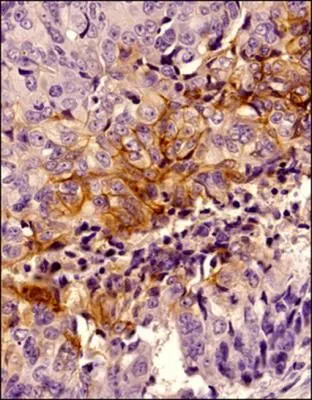
IHC-P analysis of human breast carcinoma tissue using GTX15086 Carbonic Anhydrase IX antibody. Dilution : 1:1000
| Manufacturer: | GeneTex |
| Preservative: | 0.025% Sodium azide|0.025% Sodium azide |
| Molecular Weight: | 50 |
| Physical state: | Liquid |
| Type: | Polyclonal Primary Antibody - Unconjugated |
| Alias: | carbonic anhydrase 9 , CAIX , MN |
| Shipping Condition: | Blue Ice |
| Unit(s): | 100 ul |
| Host name: | Rabbit |
| Clone: | |
| Isotype: | IgG |
| Immunogen: | A synthetic peptide made to a C-terminal sequence of human Carbonic Anhydrase IX (within residues 400-459) [UniProt Q16790] |
| Application: | ELISA, FC, ICC, IF, IHC-P, ChIP, WB, IHC-Fr, EMSA |
Description
Description: Carbonic anhydrases (CAs) are a large family of zinc metalloenzymes that catalyze the reversible hydration of carbon dioxide. They participate in a variety of biological processes, including respiration, calcification, acid-base balance, bone resorption, and the formation of aqueous humor, cerebrospinal fluid, saliva, and gastric acid. They show extensive diversity in tissue distribution and in their subcellular localization. CA IX is a transmembrane protein and the only tumor-associated carbonic anhydrase isoenzyme known. It is expressed in all clear-cell renal cell carcinoma, but is not detected in normal kidney or most other normal tissues. It may be involved in cell proliferation and transformation. This gene was mapped to 17q21.2 by fluorescence in situ hybridization, however, radiation hybrid mapping localized it to 9p13-p12. [provided by RefSeq]
Additional Text
Gene ID
768
Gene Name
CA9
Uniprot ID
Q16790
Purification
Affinity Purified
Molecular Weight
50
Antibody Clonality
Polyclonal
Note
For In vitro laboratory use only. Not for any clinical, therapeutic, or diagnostic use in humans or animals. Not for animal or human consumption
Concentration
1 mg/ml
Application Notes
WB: 1:2000. ICC/IF: 1:1000. IHC-P: 1:1000. IHC-Fr: 1:1000. ChIP assay: 1:10 - 1:500. *Optimal dilutions/concentrations should be determined by the researcher.Not tested in other applications.
Storage Note
Store as concentrated solution. Centrifuge briefly prior to opening vial. For short-term storage (1-2 weeks), store at 4C. For long-term storage, aliquot and store at -20C or below. Avoid multiple freeze-thaw cycles.
 GTX15086 Datasheet
SUPPORT
outstanding technical support

PRODUCT
we offer a full product guarantee

DELIVERY
we offer free delivery to UK universities and non profit organisations