HIF1 beta antibody [H1beta234]
Catalogue Number: GTX30116-GTX
GTX30116 Image
GTX30116 Image
GTX30116 Image
GTX30116 Image
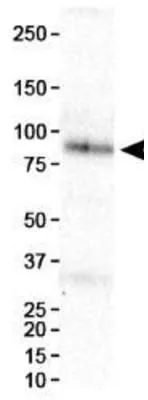
WB analysis of HeLa nuclear extract using GTX30116 HIF1 beta antibody [H1beta234].
GTX30116 Image
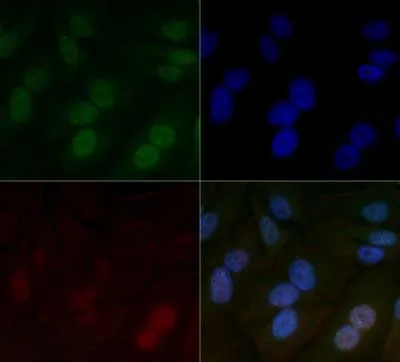
ICC/IF analysis of HeLa cells using GTX30116 HIF1 beta antibody [H1beta234]. Green : primary antibody Red : Actin Blue : DAPI Dilution : 5 µg/ml Fixation : 10% formalin Permibilization : 0.5% Triton-X100
GTX30116 Image
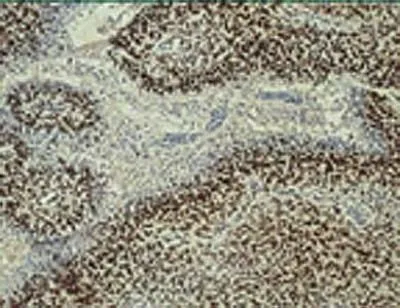
IHC-P analysis of human glioblastoma tissue using GTX30116 HIF1 beta antibody [H1beta234].
| Manufacturer: | GeneTex |
| Preservative: | 0.05% Sodium azide|0.05% Sodium azide |
| Molecular Weight: | 87 |
| Physical state: | Liquid |
| Type: | Monoclonal Primary Antibody - Unconjugated |
| Alias: | aryl hydrocarbon receptor nuclear translocator , HIF-1-beta , HIF-1beta , HIF1-beta , HIF1B , HIF1BETA , TANGO , bHLHe2 |
| Shipping Condition: | Blue Ice |
| Unit(s): | 100 ul |
| Host name: | Mouse |
| Clone: | H1beta234 |
| Isotype: | IgG1 |
| Immunogen: | Fusion protein containing amino acids 496-789 of human HIF-1 beta. [UniProt# P27540] |
| Application: | ICC, IF, IHC-P, IP, ChIP, WB, EMSA |
Description
Description: The aryl hydrocarbon (Ah) receptor is involved in the induction of several enzymes that participate in xenobiotic metabolism. The ligand-free, cytosolic form of the Ah receptor is complexed to heat shock protein 90. Binding of ligand, which includes dioxin and polycyclic aromatic hydrocarbons, results in translocation of the ligand-binding subunit only to the nucleus. Induction of enzymes involved in xenobiotic metabolism occurs through binding of the ligand-bound Ah receptor to xenobiotic responsive elements in the promoters of genes for these enzymes. This gene encodes a protein that forms a complex with the ligand-bound Ah receptor, and is required for receptor function. The encoded protein has also been identified as the beta subunit of a heterodimeric transcription factor, hypoxia-inducible factor 1 (HIF1). A t(1;12)(q21;p13) translocation, which results in a TEL-ARNT fusion protein, is associated with acute myeloblastic leukemia. Three alternatively spliced variants encoding different isoforms have been described for this gene. [provided by RefSeq]
Additional Text
Gene ID
405
Gene Name
ARNT
Uniprot ID
P27540
Concentration
1.4 mg/mL
Purification
Protein G purified
Molecular Weight
87
Antibody Clonality
Monoclonal
Note
For In vitro laboratory use only. Not for any clinical, therapeutic, or diagnostic use in humans or animals. Not for animal or human consumption
Application Notes
WB: 1:500 - 1:2000. IHC-P: 1:100. ChIP assay: 1:10 - 1:500. *Optimal dilutions/concentrations should be determined by the researcher.Not tested in other applications.
Storage Note
Store as concentrated solution. Centrifuge briefly prior to opening vial. For short-term storage (1-2 weeks), store at 4C. For long-term storage, aliquot and store at -20C or below. Avoid multiple freeze-thaw cycles.
 GTX30116 Datasheet
SUPPORT
outstanding technical support

PRODUCT
we offer a full product guarantee

DELIVERY
we offer free delivery to UK universities and non profit organisations