CFTR antibody [CFTR/1643]
Catalogue Number: GTX34589-GTX
GTX34589 Image
GTX34589 Image
GTX34589 Image
GTX34589 Image
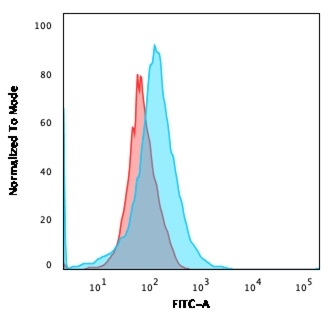
FACS analysis of MOLT-4 cells using GTX34589 CFTR antibody [CFTR/1643]. Blue : Primary antibody Red : Isotype control
GTX34589 Image
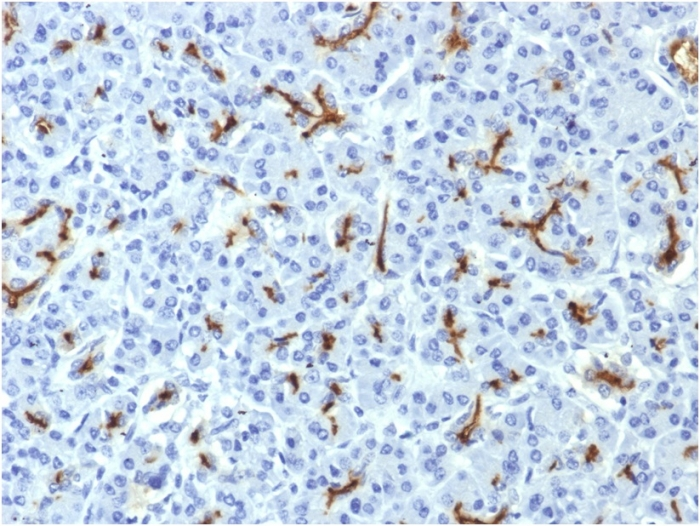
IHC-P analysis of human pancreas tissue using GTX34589 CFTR antibody [CFTR/1643].
GTX34589 Image
| Manufacturer: | GeneTex |
| Preservative: | 0.05% Sodium azide|0.05% Sodium azide |
| Molecular Weight: | 168 |
| Physical state: | Liquid |
| Type: | Monoclonal Primary Antibody - Unconjugated |
| Alias: | ABC35 , ABCC7 , CF , CFTR , CFTR/MRP , MRP7 , TNRCFTR , cystic fibrosis transmembrane conductance regulator , dJ760C5.1 , CF transmembrane conductance regulator |
| Shipping Condition: | Blue Ice |
| Unit(s): | 100 ug |
| Host name: | Mouse |
| Clone: | CFTR/1643 |
| Isotype: | IgG2b |
| Immunogen: | Recombinant fragment (around aa 258-385) of human CFTR protein (exact sequence is proprietary) |
| Application: | FC, IHC-P, PA |
Description
Description: This gene encodes a member of the ATP-binding cassette (ABC) transporter superfamily. The encoded protein functions as a chloride channel, making it unique among members of this protein family, and controls ion and water secretion and absorption in epithelial tissues. Channel activation is mediated by cycles of regulatory domain phosphorylation, ATP-binding by the nucleotide-binding domains, and ATP hydrolysis. Mutations in this gene cause cystic fibrosis, the most common lethal genetic disorder in populations of Northern European descent. The most frequently occurring mutation in cystic fibrosis, DeltaF508, results in impaired folding and trafficking of the encoded protein. Multiple pseudogenes have been identified in the human genome. [provided by RefSeq, Aug 2017]
Additional Text
Gene Name
CFTR
Uniprot ID
P13569
Gene ID
1080
Purification
Protein A/G Purified
Concentration
0.2 mg/ml
Antibody Clonality
Monoclonal
Note
For In vitro laboratory use only. Not for any clinical, therapeutic, or diagnostic use in humans or animals. Not for animal or human consumption
Storage Note
Store as concentrated solution. Centrifuge briefly prior to opening vial. For short-term storage (1-2 weeks), store at 4C. For long-term storage, aliquot and store at -20C or below. Avoid multiple freeze-thaw cycles.
Application Notes
IHC-P: 1-2µg/ml for 30 minutes at RT. FCM: 1-2µg/10⁶ cells. *Optimal dilutions/concentrations should be determined by the researcher.Not tested in other applications.
 GTX34589 Datasheet
SUPPORT
outstanding technical support

PRODUCT
we offer a full product guarantee

DELIVERY
we offer free delivery to UK universities and non profit organisations