MMP25 antibody
Catalogue Number: GTX54370-GTX
GTX54370 Image
GTX54370 Image
GTX54370 Image
GTX54370 Image
GTX54370 Image
GTX54370 Image
GTX54370 Image
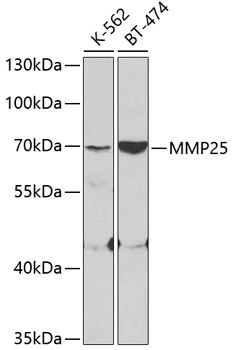
WB analysis of various sample lysates using GTX54370 MMP25 antibody. Dilution : 1:400 Loading : 25µg per lane
GTX54370 Image
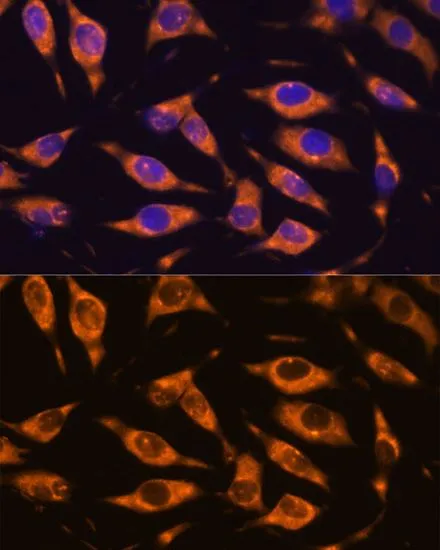
ICC/IF analysis of L929 cells using GTX54370 MMP25 antibody. Blue : DAPI Dilution : 1:100
GTX54370 Image
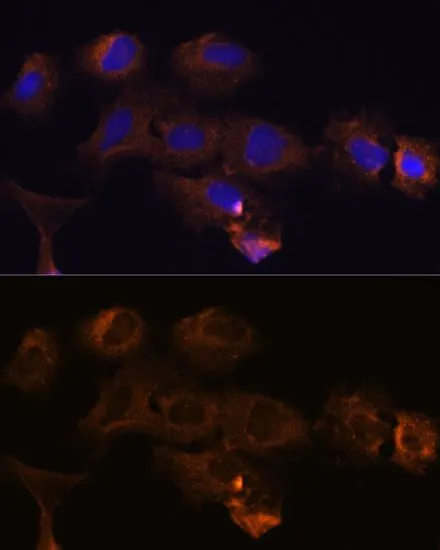
ICC/IF analysis of C6 cells using GTX54370 MMP25 antibody. Blue : DAPI Dilution : 1:100
GTX54370 Image
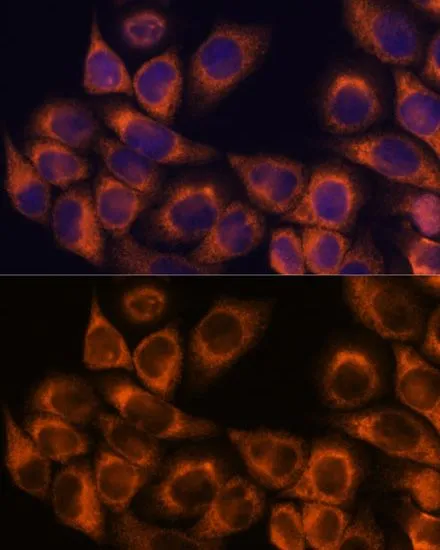
ICC/IF analysis of HeLa cells using GTX54370 MMP25 antibody. Blue : DAPI Dilution : 1:100
GTX54370 Image
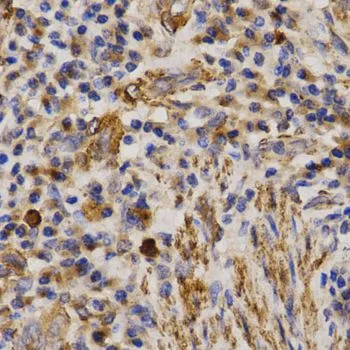
IHC-P analysis of human lung cancer tissue using GTX54370 MMP25 antibody. Dilution : 1:200
GTX54370 Image
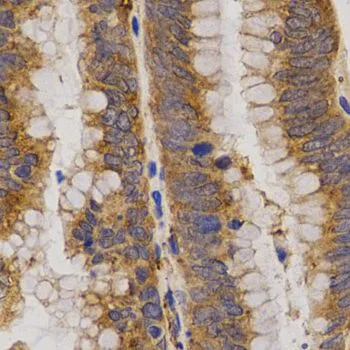
IHC-P analysis of human rectal cancer tissue using GTX54370 MMP25 antibody. Dilution : 1:200
| Manufacturer: | GeneTex |
| Preservative: | 0.02% Sodium azide|0.02% Sodium azide |
| Molecular Weight: | 63 |
| Physical state: | Liquid |
| Type: | Polyclonal Primary Antibody - Unconjugated |
| Alias: | matrix metallopeptidase 25 , MMP-25 , MMP20 , MMP20A , MMPL1 , MT-MMP 6 , MT-MMP6 , MT6-MMP , MT6MMP , MTMMP6 |
| Shipping Condition: | Blue Ice |
| Unit(s): | 100 ug |
| Host name: | Rabbit |
| Clone: | |
| Isotype: | IgG |
| Immunogen: | A synthetic peptide of human MMP25 |
| Application: | ICC, IF, IHC-P, WB |
Description
Description: Proteins of the matrix metalloproteinase (MMP) family are involved in the breakdown of extracellular matrix in normal physiological processes, such as embryonic development, reproduction, and tissue remodeling, as well as in disease processes, such as arthritis and metastasis. Most MMPs are secreted as inactive proproteins which are activated when cleaved by extracellular proteinases. However, the protein encoded by this gene is a member of the membrane-type MMP (MT-MMP) subfamily, attached to the plasma membrane via a glycosylphosphatidyl inositol anchor. In response to bacterial infection or inflammation, the encoded protein is thought to inactivate alpha-1 proteinase inhibitor, a major tissue protectant against proteolytic enzymes released by activated neutrophils, facilitating the transendothelial migration of neutrophils to inflammatory sites. The encoded protein may also play a role in tumor invasion and metastasis through activation of MMP2. The gene has previously been referred to as MMP20 but has been renamed MMP25. [provided by RefSeq, Jul 2008]
Additional Text
Gene ID
64386
Uniprot ID
Q9NPA2
Gene Name
MMP25
Purification
Affinity Purified
Molecular Weight
63
Antibody Clonality
Polyclonal
Note
For In vitro laboratory use only. Not for any clinical, therapeutic, or diagnostic use in humans or animals. Not for animal or human consumption
Application Notes
WB: 1:500 - 1:2000. ICC/IF: 1:50 - 1:200. IHC-P: 1:50 - 1:200. *Optimal dilutions/concentrations should be determined by the researcher.Not tested in other applications.
Storage Note
Store as concentrated solution. Centrifuge briefly prior to opening vial. For short-term storage (1-2 weeks), store at 4C. For long-term storage, aliquot and store at -20C or below. Avoid multiple freeze-thaw cycles.
 GTX54370 Datasheet
SUPPORT
outstanding technical support

PRODUCT
we offer a full product guarantee

DELIVERY
we offer free delivery to UK universities and non profit organisations