ETO / RUNX1T1 antibody - ChIP grade
Catalogue Number: GTX60332-GTX
GTX60332 Image
GTX60332 Image
GTX60332 Image
GTX60332 Image
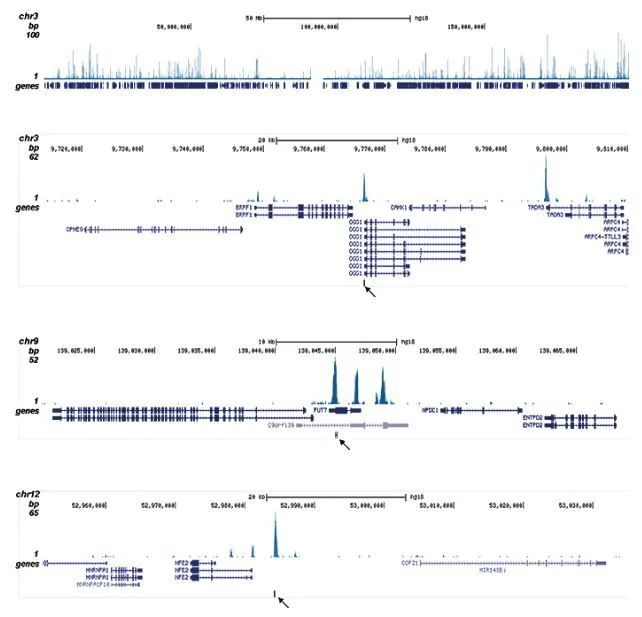
ChIP analysis of SKNO-1 cells using GTX60332 ETO / RUNX1T1 antibody - ChIP grade. The IP'd DNA of 6 ChIP's was pooled and analysed with an Illumina Genome Analyzer. Library preparation, cluster generation and sequencing were performed according to the manufacturer's instructions. The 32 bp tags were aligned to the human reference genome (hg18) using the ELAND algorithm. Figure 2 shows the results of the complete chromosome 3 and three genomic regions surrounding the OGG1, FUT7 and NFE2 genes, respectively. The position of the PCR amplicon is indicated with an arrow.
GTX60332 Image
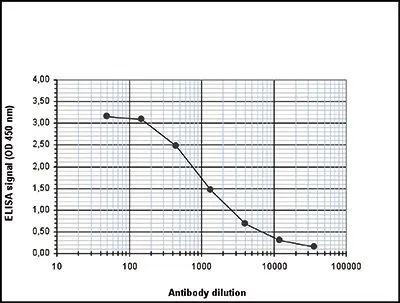
ELISA analysis of peptides used for immunization using GTX60332 ETO / RUNX1T1 antibody - ChIP grade.
GTX60332 Image
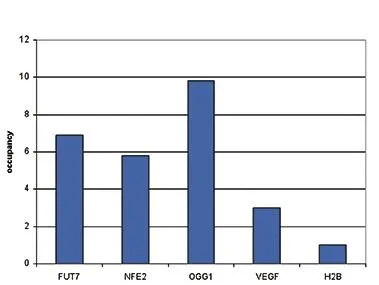
ChIP analysis of sheared chromatin from 1.25x10? SKNO-1 cells using GTX60332 ETO / RUNX1T1 antibody - ChIP grade. QPCR was performed using primers specific for the FUT7, NFE2, OGG1 and VEGF genes. This figure shows the occupancy, calculated as the ratio + control/background for which the H2B gene was used. Antibody amount : 4µl
| Manufacturer: | GeneTex |
| Preservative: | 0.05% Sodium azide|0.05% Sodium azide |
| Molecular Weight: | 68 |
| Physical state: | Liquid |
| Type: | Polyclonal Primary Antibody - Unconjugated |
| Alias: | RUNX1 translocation partner 1 , AML1-MTG8 , AML1T1 , CBFA2T1 , CDR , ETO , MTG8 , ZMYND2 |
| Shipping Condition: | Blue Ice |
| Unit(s): | 50 ul |
| Host name: | Rabbit |
| Clone: | |
| Isotype: | IgG |
| Immunogen: | Human ETO (runt-related transcription factor 1; translocated to, 1 (cyclin D-related)) using two KLH-conjugated synthetic peptides containing sequences from the N-terminal and the central region of the protein, respectively. |
| Application: | ELISA, ChIP |
Description
Description: This gene encodes a member of the myeloid translocation gene family which interact with DNA-bound transcription factors and recruit a range of corepressors to facilitate transcriptional repression. The t(8;21)(q22;q22) translocation is one of the most frequent karyotypic abnormalities in acute myeloid leukemia. The translocation produces a chimeric gene made up of the 5'-region of the runt-related transcription factor 1 gene fused to the 3'-region of this gene. The chimeric protein is thought to associate with the nuclear corepressor/histone deacetylase complex to block hematopoietic differentiation. Alternative splicing results in multiple transcript variants. [provided by RefSeq, Nov 2010]
Additional Text
Gene Name
RUNX1T1
Uniprot ID
Q06455
Gene ID
862
Purification
Unpurified
Antibody Clonality
Polyclonal
Note
For In vitro laboratory use only. Not for any clinical, therapeutic, or diagnostic use in humans or animals. Not for animal or human consumption
Application Notes
ELISA: 1:100. ChIP assay: 1-10 µl. *Optimal dilutions/concentrations should be determined by the researcher.Not tested in other applications.
Storage Note
Store as concentrated solution. Centrifuge briefly prior to opening vial. For short-term storage (1-2 weeks), store at 4C. For long-term storage, aliquot and store at -20C or below. Avoid multiple freeze-thaw cycles.
 GTX60332 Datasheet
SUPPORT
outstanding technical support

PRODUCT
we offer a full product guarantee

DELIVERY
we offer free delivery to UK universities and non profit organisations