MBD1 antibody - ChIP grade
Catalogue Number: GTX60359-GTX
GTX60359 Image
GTX60359 Image
GTX60359 Image
GTX60359 Image
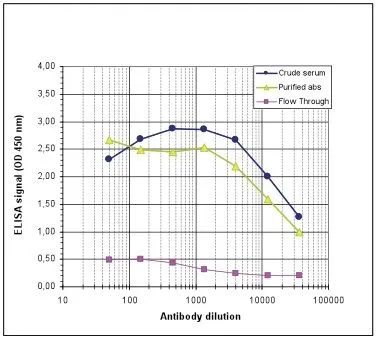
ELISA analysis of peptides used for immunization using GTX60359 MBD1 antibody - ChIP grade.
GTX60359 Image
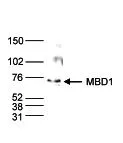
WB analysis of nuclear extracts (40 µg) from HeLa cells using GTX60359 MBD1 antibody - ChIP grade. Dilution : 1:500
GTX60359 Image
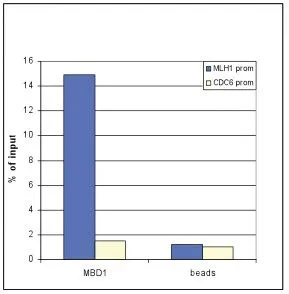
ChIP analysis of sheared chromatin from 10? U2OS cells using GTX60359 MBD1 antibody - ChIP grade. Beads only were used as a negative IP control. Quantitative PCR was performed with primers for the promoters of the MLH1 gene (used as a positive control) and CDC6 gene (used as a negative control). This figure shows the recovery, expressed as a % of input (the relative amount of immunoprecipitated DNA compared to input DNA after qPCR analysis).
| Manufacturer: | GeneTex |
| Preservative: | 0.05% Sodium azide|0.05% ProClin 300|0.05% Sodium azide, 0.05% ProClin 300 |
| Molecular Weight: | 67 |
| Physical state: | Liquid |
| Type: | Polyclonal Primary Antibody - Unconjugated |
| Alias: | methyl-CpG binding domain protein 1 , CXXC3 , PCM1 , RFT |
| Shipping Condition: | Blue Ice |
| Unit(s): | 50 ug |
| Host name: | Rabbit |
| Clone: | |
| Isotype: | IgG |
| Immunogen: | Human MBD1 (Methyl-CpG-binding domain protein 1), using a KLH-conjugated synthetic peptide containing a sequence from the N-terminal part of the protein. |
| Application: | ELISA, ChIP, WB |
Description
Description: The protein encoded by this gene is a member of a family of nuclear proteins related by the presence of a methyl-CpG binding domain (MBD). These proteins are capable of binding specifically to methylated DNA, and some members can also repress transcription from methylated gene promoters. This protein contains multiple domains: MBD at the N-terminus that functions both in binding to methylated DNA and in protein interactions; several CXXC-type zinc finger domains that mediate binding to non-methylated CpG dinucleotides; transcriptional repression domain (TRD) at the C-terminus that is involved in transcription repression and in protein interactions. Numerous alternatively spliced transcript variants encoding different isoforms have been noted for this gene.[provided by RefSeq, Feb 2011]
Additional Text
Gene Name
MBD1
Concentration
0.7 mg/ml
Gene ID
4152
Purification
Affinity Purified
Molecular Weight
67
Uniprot ID
Q9UIS9
Antibody Clonality
Polyclonal
Note
For In vitro laboratory use only. Not for any clinical, therapeutic, or diagnostic use in humans or animals. Not for animal or human consumption
Application Notes
WB: 1:500. ELISA: 1:1,000. ChIP assay: 1-5 µg. *Optimal dilutions/concentrations should be determined by the researcher.Not tested in other applications.
Storage Note
Store as concentrated solution. Centrifuge briefly prior to opening vial. For short-term storage (1-2 weeks), store at 4C. For long-term storage, aliquot and store at -20C or below. Avoid multiple freeze-thaw cycles.
 GTX60359 Datasheet
SUPPORT
outstanding technical support

PRODUCT
we offer a full product guarantee

DELIVERY
we offer free delivery to UK universities and non profit organisations