CD13 antibody [WM15] (APC)
Catalogue Number: GTX74832-GTX
| Manufacturer: | GeneTex |
| Preservative: | 15 mM Sodium azide |
| Molecular Weight: | 110 |
| Physical state: | Liquid |
| Type: | Monoclonal Primary Antibody - Conjugated |
| Alias: | ANPEP , APN , CD13 , GP150 , LAP1 , P150 , PEPN , alanyl aminopeptidase, membrane |
| Shipping Condition: | Blue Ice |
| Unit(s): | 100 tests |
| Host name: | Mouse |
| Clone: | WM15 |
| Isotype: | IgG1 |
| Immunogen: | Human AML cells |
| Application: | FC |
Description
Description: Aminopeptidase N is located in the small-intestinal and renal microvillar membrane, and also in other plasma membranes. In the small intestine aminopeptidase N plays a role in the final digestion of peptides generated from hydrolysis of proteins by gastric and pancreatic proteases. Its function in proximal tubular epithelial cells and other cell types is less clear. The large extracellular carboxyterminal domain contains a pentapeptide consensus sequence characteristic of members of the zinc-binding metalloproteinase superfamily. Sequence comparisons with known enzymes of this class showed that CD13 and aminopeptidase N are identical. The latter enzyme was thought to be involved in the metabolism of regulatory peptides by diverse cell types, including small intestinal and renal tubular epithelial cells, macrophages, granulocytes, and synaptic membranes from the CNS. Human aminopeptidase N is a receptor for one strain of human coronavirus that is an important cause of upper respiratory tract infections. Defects in this gene appear to be a cause of various types of leukemia or lymphoma. [provided by RefSeq, Jul 2008]
Additional Text
Gene ID
290
Gene Name
ANPEP
Uniprot ID
P15144
Antibody Clonality
Monoclonal
Purification
Size-exclusion Chromatography
Note
For In vitro laboratory use only. Not for any clinical, therapeutic, or diagnostic use in humans or animals. Not for animal or human consumption
Storage Note
Store as concentrated solution. Centrifuge briefly prior to opening vial. Store at 4C. DO NOT FREEZE. Protect from light.
Application Notes
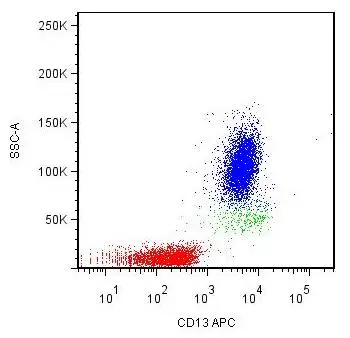
FCM: 10 µl reagent / 100 µl of whole blood or 10⁶ cells in a suspension. *Optimal dilutions/concentrations should be determined by the researcher.Not tested in other applications.
 GTX74832 Datasheet
SUPPORT
outstanding technical support

PRODUCT
we offer a full product guarantee

DELIVERY
we offer free delivery to UK universities and non profit organisations