B-Raf antibody
Catalogue Number: GTX85102-GTX
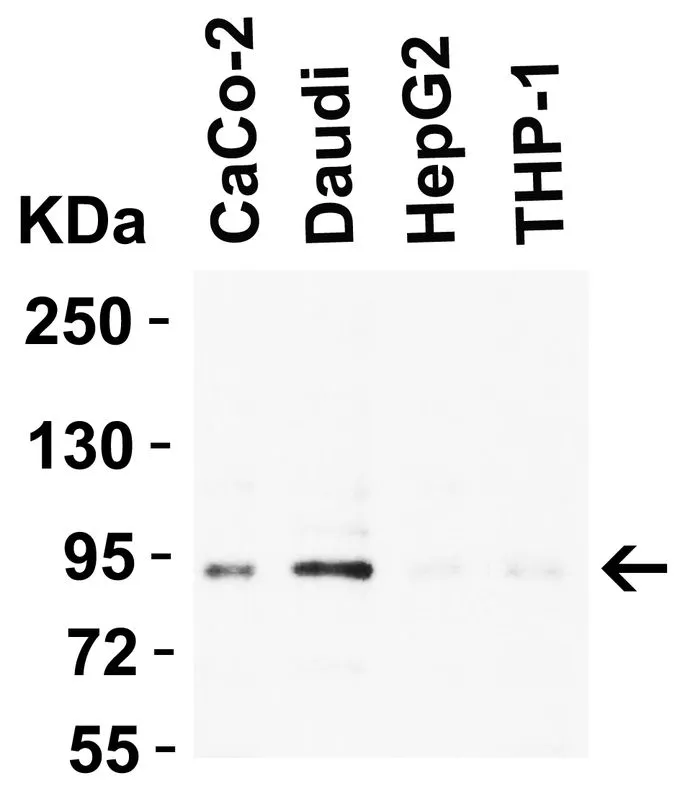
GTX85102 Image
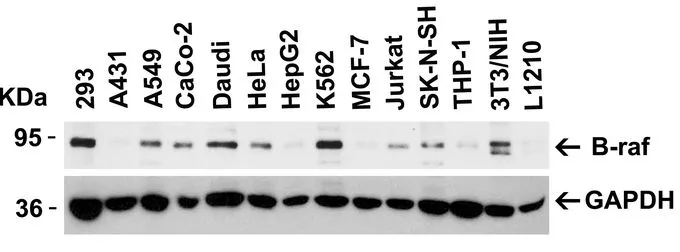
GTX85102 Image
GTX85102 Image
WB analysis of various samples using GTX85102 B-Raf antibody. Dilution : 0.5µg/mL Loading : 15µg of lysates per lane
GTX85102 Image
WB analysis of various samples using GTX85102 B-Raf antibody. Dilution : 0.5µg/mL Loading : 15µg of lysates per lane
| Manufacturer: | GeneTex |
| Preservative: | 0.02% Sodium azide|0.02% Sodium azide |
| Molecular Weight: | 84 |
| Physical state: | Liquid |
| Type: | Polyclonal Primary Antibody - Unconjugated |
| Alias: | B-Raf proto-oncogene, serine/threonine kinase , B-RAF1 , B-raf , BRAF1 , NS7 , RAFB1 |
| Shipping Condition: | Blue Ice |
| Unit(s): | 100 ug |
| Host name: | Chicken |
| Clone: | |
| Isotype: | IgY |
| Immunogen: | B-raf antibody was raised against an 18 amino acid synthetic peptide near the center of human B-raf.The immunogen is located within amino acids 330 - 380 of B-raf. |
| Application: | ELISA, WB |
Description
Description: B-raf belongs to the raf/mil family of serine/threonine protein kinases and plays a role in regulating the MAP kinase/ERKs signaling pathway, which affects cell division, differentiation, and secretion. The Ras/Raf/MEK/ERK and Ras/PI3K/PTEN/Akt pathways interact with each other to regulate growth and in some cases tumorigenesis. Mutations in B-raf have been associated with several cancers, including non-Hodgkin lymphoma, colorectal cancer, malignant melanoma, thyroid carcinoma, non-small cell lung carcinoma, and adenocarcinoma of lung, leading to speculation on the possibility of B-raf as a therapeutic target for treating cancers. Mutations in this gene have also been associated with cardiofaciocutaneous syndrome (CFCS), a disease characterized by heart defects, mental retardation and a distinctive facial appearance.
Additional Text
Gene Name
BRAF
Uniprot ID
P15056
Gene ID
673
Purification
Affinity Purified
Molecular Weight
84
Antibody Clonality
Polyclonal
Note
For In vitro laboratory use only. Not for any clinical, therapeutic, or diagnostic use in humans or animals. Not for animal or human consumption
Concentration
1 mg/ml
Application Notes
WB: 0.5-2 µg/ml. *Optimal dilutions/concentrations should be determined by the researcher.Not tested in other applications.
Storage Note
Store as concentrated solution. Centrifuge briefly prior to opening vial. For short-term storage (1-2 weeks), store at 4C. For long-term storage, aliquot and store at -20C or below. Avoid multiple freeze-thaw cycles.
 GTX85102 Datasheet
SUPPORT
outstanding technical support

PRODUCT
we offer a full product guarantee

DELIVERY
we offer free delivery to UK universities and non profit organisations