SBP2 antibody, Internal
Catalogue Number: GTX89253-GTX
GTX89253 Image
GTX89253 Image
GTX89253 Image
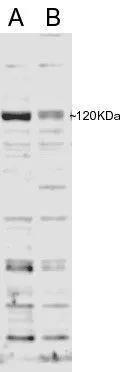
WB analysis of HFF cell lysate with B) 100nM siRNA or A) control siRNA using GTX89253 SBP2 antibody, Internal.
GTX89253 Image
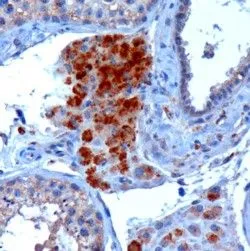
IHC-P analysis of human testis using GTX89253 SBP2 antibody, Internal. Antigen retrieval : Tris/EDTA buffer pH 9 Dilution : 3µg/ml
| Manufacturer: | GeneTex |
| Preservative: | 0.02% Sodium azide|0.02% Sodium azide |
| Molecular Weight: | 95 |
| Physical state: | Liquid |
| Type: | Polyclonal Primary Antibody - Unconjugated |
| Alias: | SECIS binding protein 2 , SBP2 |
| Shipping Condition: | Blue Ice |
| Unit(s): | 100 ug |
| Host name: | Goat |
| Clone: | |
| Isotype: | IgG |
| Immunogen: | Peptide with sequence C-KERQERKQRLQEN, from the internal region of the protein sequence according to NP_076982.3. |
| Application: | ICC, IF, IHC-P, IP, WB |
Description
Description: The protein encoded by this gene is one of the essential components of the machinery involved in co-translational insertion of selenocysteine (Sec) into selenoproteins. Sec is encoded by the UGA codon, which normally signals translation termination. The recoding of UGA as Sec codon requires a Sec insertion sequence (SECIS) element; present in the 3' untranslated regions of eukaryotic selenoprotein mRNAs. This protein specifically binds to the SECIS element, which is stimulated by a Sec-specific translation elongation factor. Mutations in this gene have been associated with reduction in enzymatic activity of type II iodothyronine deiodinase (a selenoprotein) and abnormal thyroid hormone metabolism. Alternatively spliced transcript variants have been found for this gene. [provided by RefSeq, Aug 2017]
Additional Text
Gene Name
SECISBP2
Concentration
0.5 mg/ml
Uniprot ID
Q96T21
Gene ID
79048
Molecular Weight
95
Purification
Ammonium Sulfate Precipitated; Affinity Purified
Antibody Clonality
Polyclonal
Note
For In vitro laboratory use only. Not for any clinical, therapeutic, or diagnostic use in humans or animals. Not for animal or human consumption
Application Notes
WB: 0.1-0.3µg/ml. IHC-P: 3µg/ml. *Optimal dilutions/concentrations should be determined by the researcher.Not tested in other applications.
Storage Note
Store as concentrated solution. Centrifuge briefly prior to opening vial. For short-term storage (1-2 weeks), store at 4C. For long-term storage, aliquot and store at -20C or below. Avoid multiple freeze-thaw cycles.
 GTX89253 Datasheet
SUPPORT
outstanding technical support

PRODUCT
we offer a full product guarantee

DELIVERY
we offer free delivery to UK universities and non profit organisations